

Основные нотные знаки
A B / H C D E F G Ля Си До Ре Ми Фа Соль The system of notation gives musicians the information they need to play music as the composer intended it.
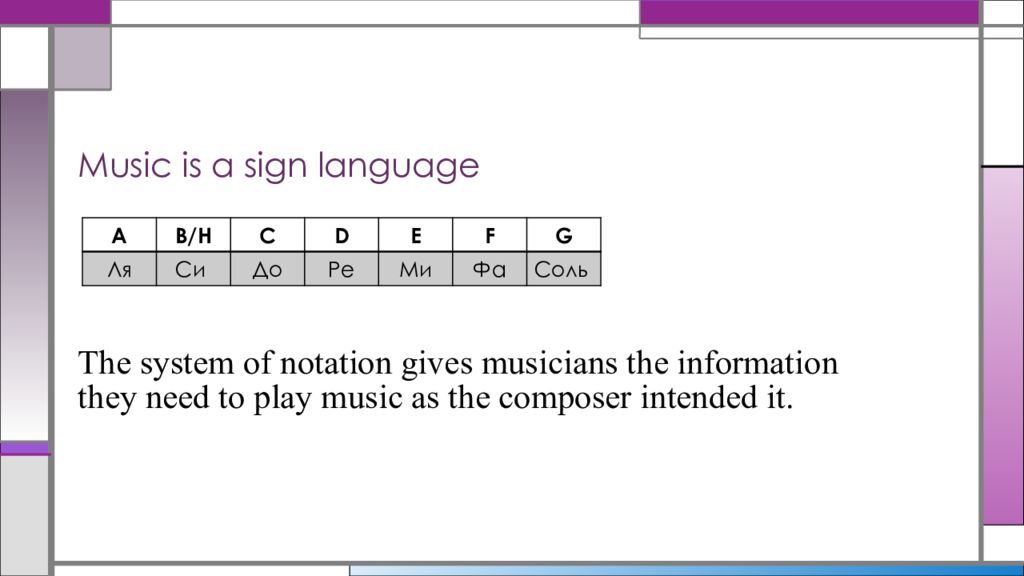
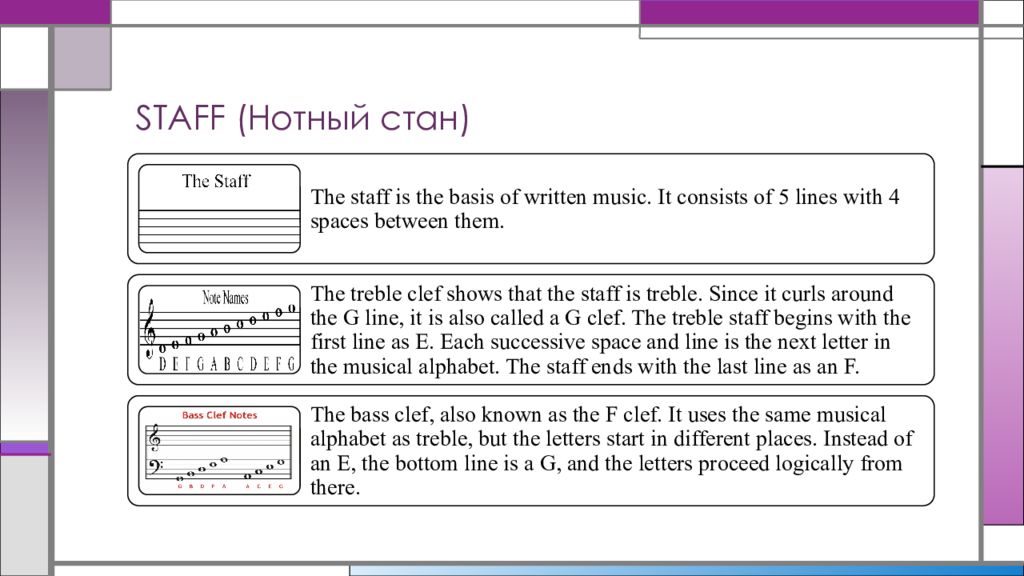
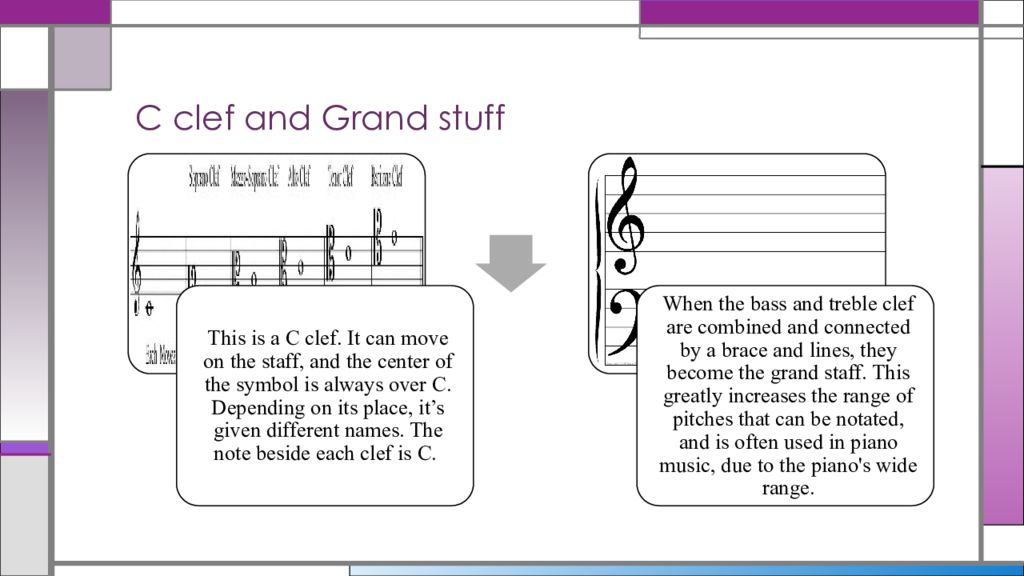
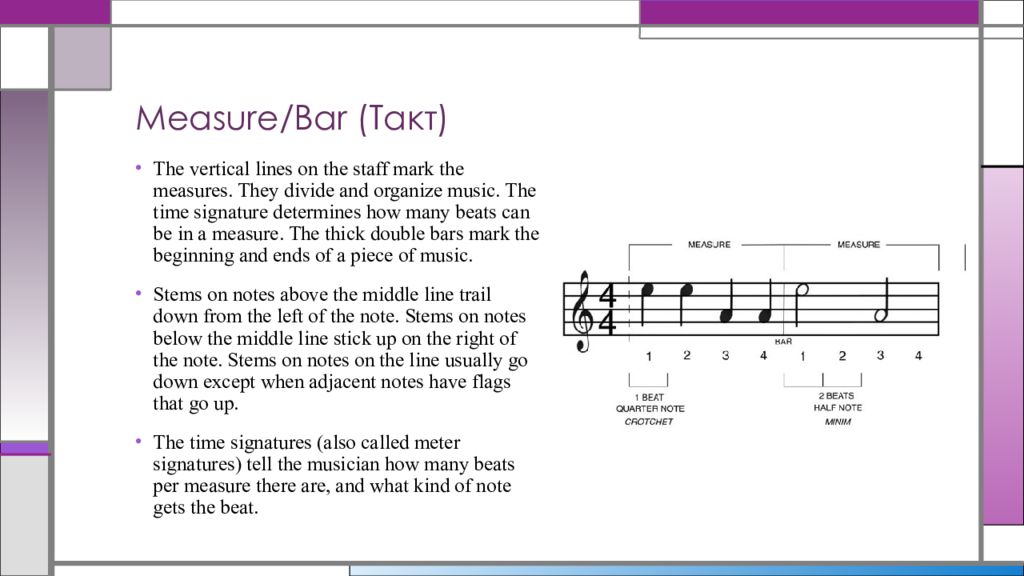
The vertical lines on the staff mark the measures. They divide and organize music. The time signature determines how many beats can be in a measure. The thick double bars mark the beginning and ends of a piece of music. Stems on notes above the middle line trail down from the left of the note. Stems on notes below the middle line stick up on the right of the note. Stems on notes on the line usually go down except when adjacent notes have flags that go up. The time signatures (also called meter signatures) tell the musician how many beats per measure there are, and what kind of note gets the beat.
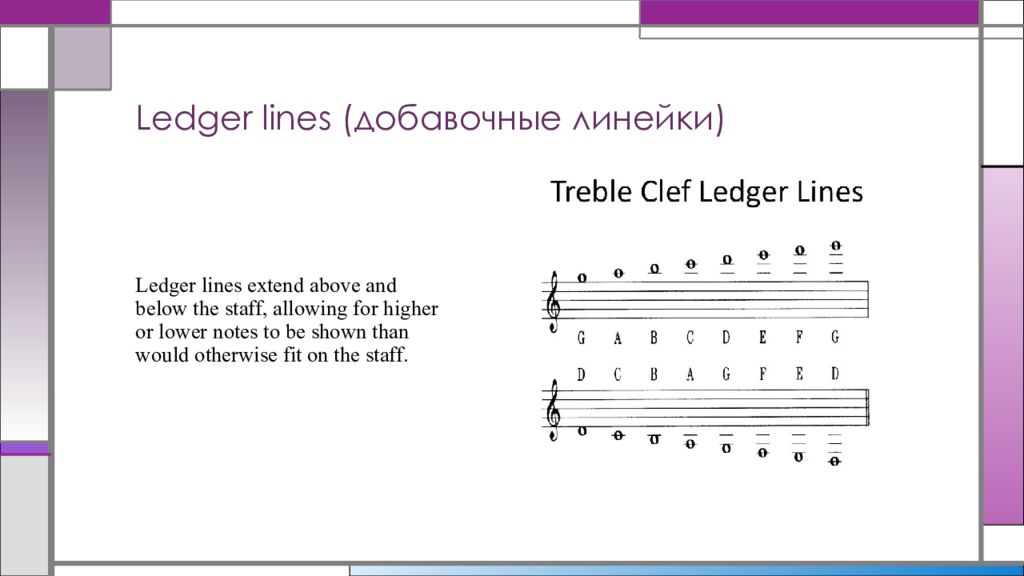
Ledger lines extend above and below the staff, allowing for higher or lower notes to be shown than would otherwise fit on the staff.
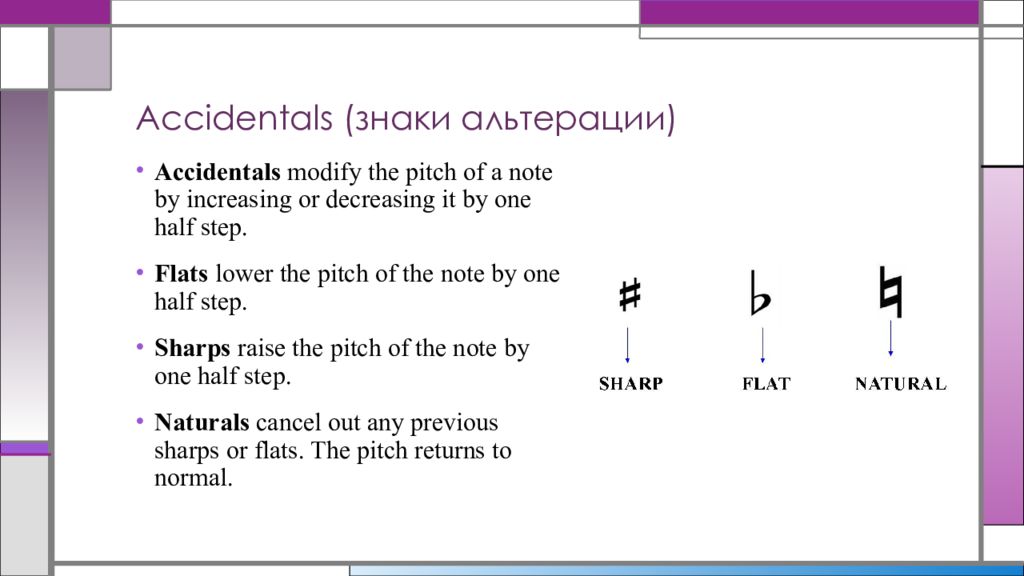
Accidentals modify the pitch of a note by increasing or decreasing it by one half step. Flats lower the pitch of the note by one half step. Sharps raise the pitch of the note by one half step. Naturals cancel out any previous sharps or flats. The pitch returns to normal.
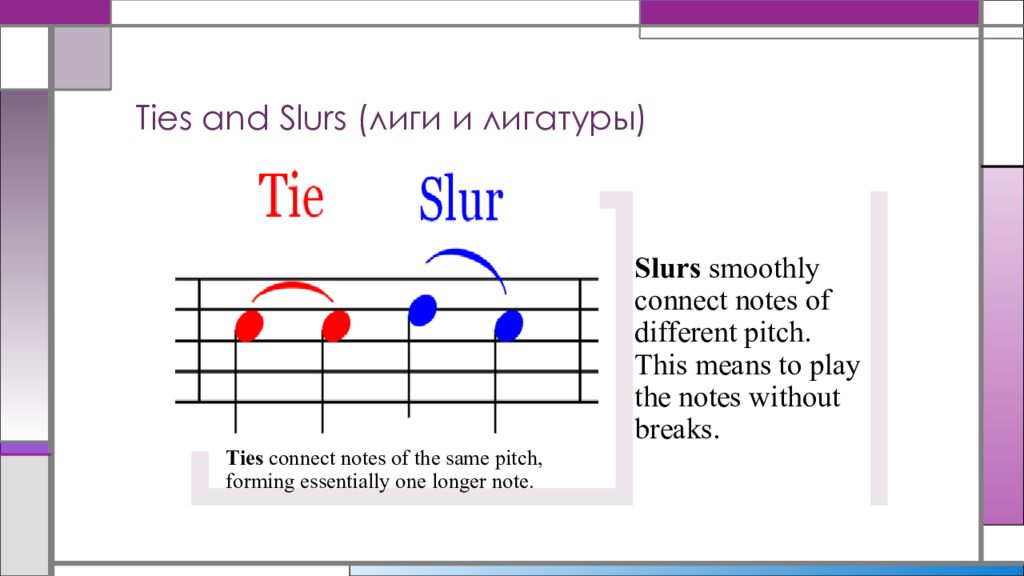
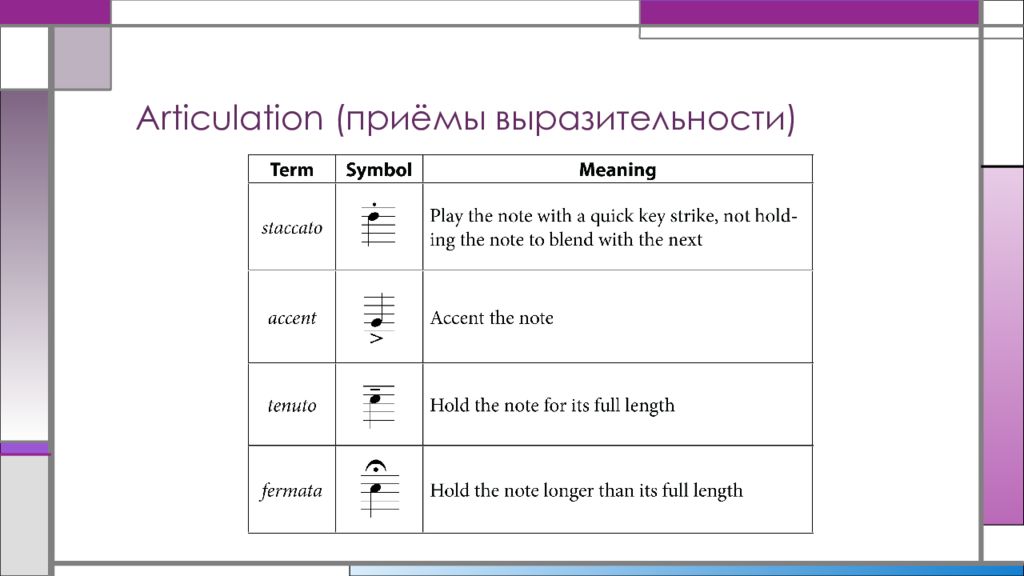
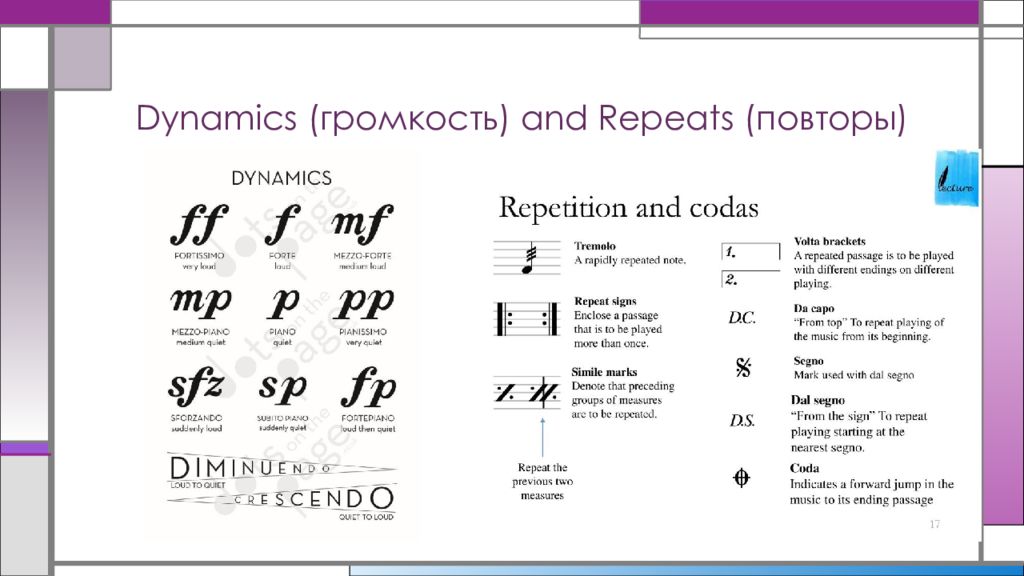
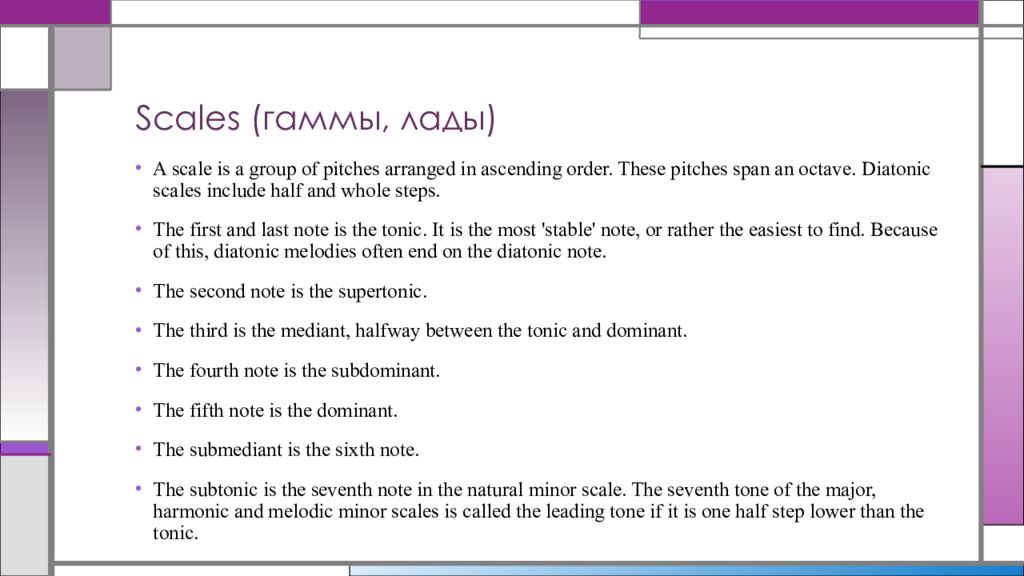
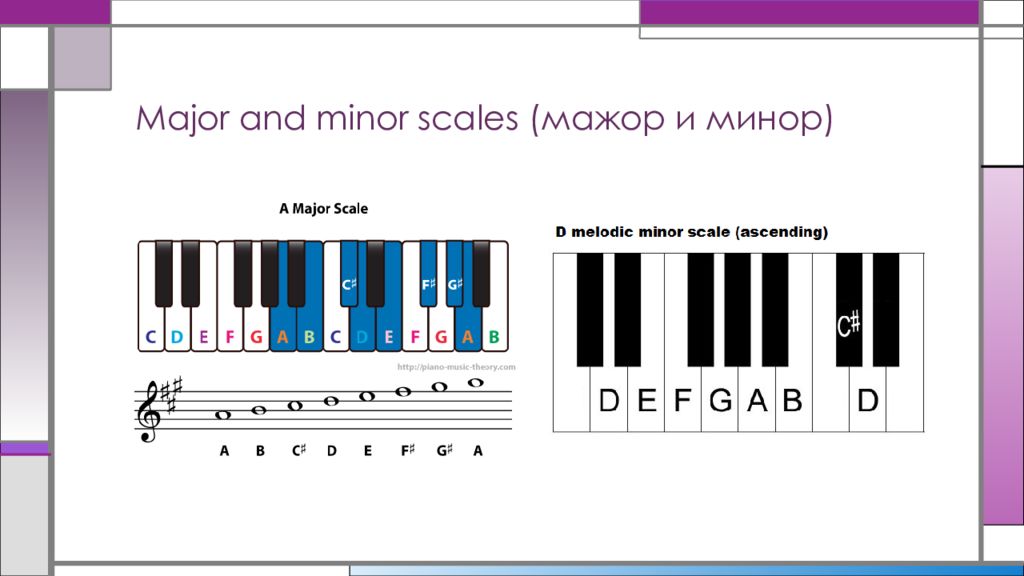
A scale is a group of pitches arranged in ascending order. These pitches span an octave. Diatonic scales include half and whole steps. The first and last note is the tonic. It is the most 'stable' note, or rather the easiest to find. Because of this, diatonic melodies often end on the diatonic note. The second note is the supertonic. The third is the mediant, halfway between the tonic and dominant. The fourth note is the subdominant. The fifth note is the dominant. The submediant is the sixth note. The subtonic is the seventh note in the natural minor scale. The seventh tone of the major, harmonic and melodic minor scales is called the leading tone if it is one half step lower than the tonic.