

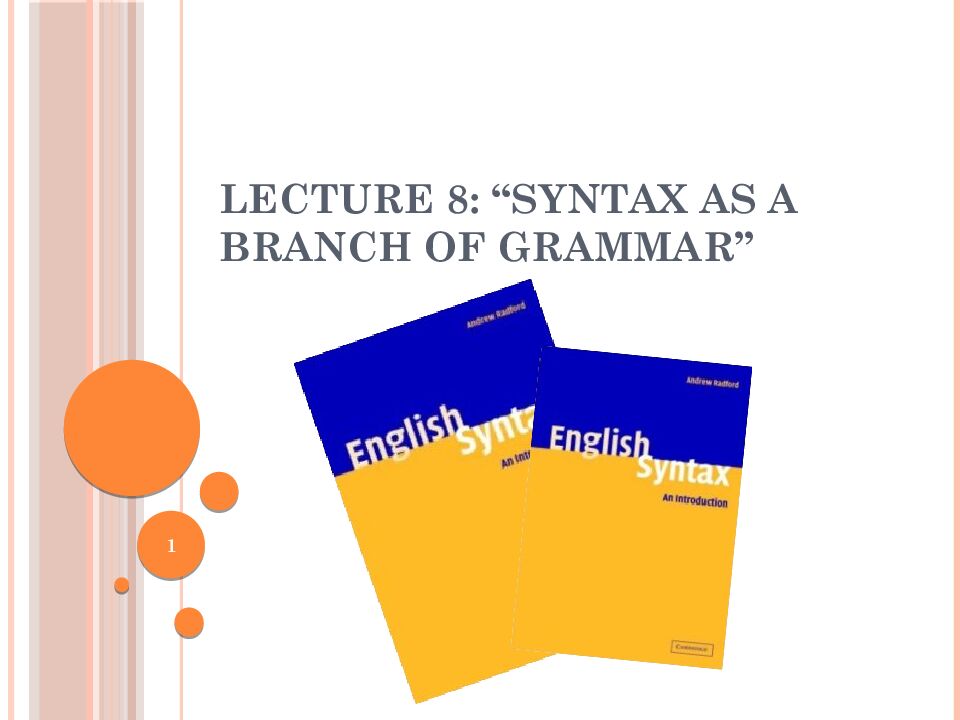
1
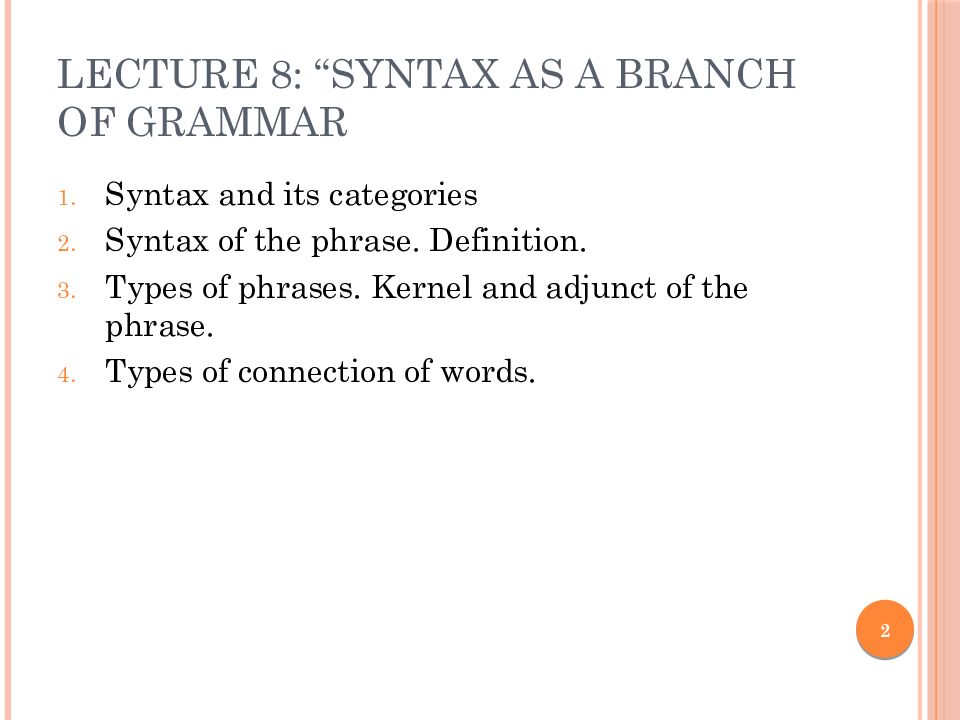
Syntax and its categories Syntax of the phrase. Definition. Types of phrases. Kernel and adjunct of the phrase. Types of connection of words. 2
What does it study? Why is it necessary for the Language? 3
Syntax is "the study of the principles and processes by which sentences are constructed in particular languages”. ( Noam Chomsky ) Syntax is the study of the rules and principles that govern the phrase and sentence structure of any individual language. ( Derek Bickerton ) 4
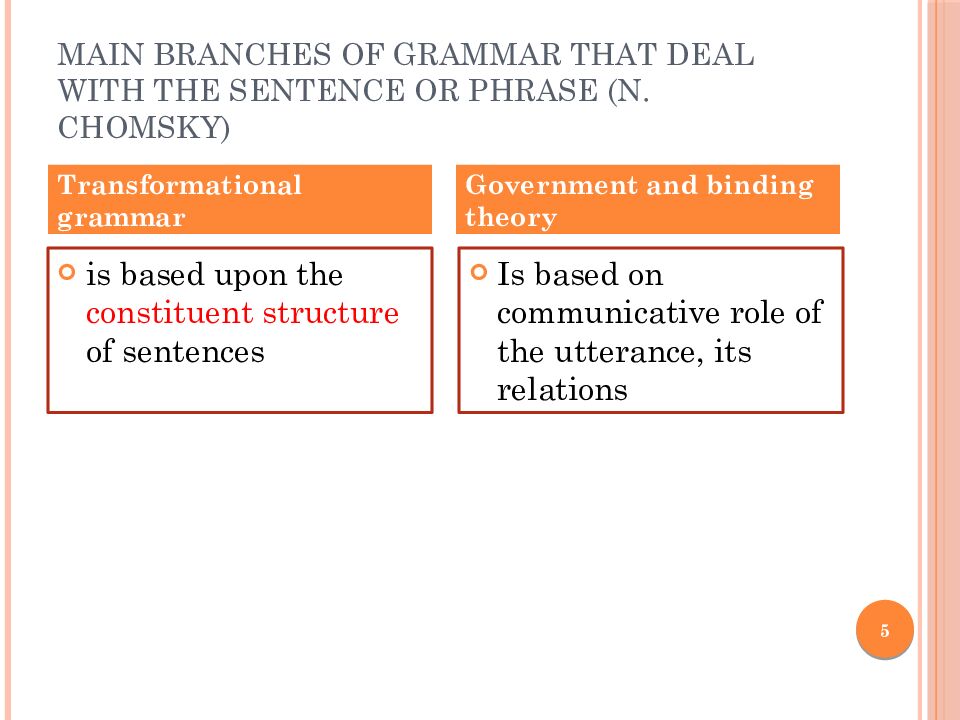
is based upon the constituent structure of sentences Is based on communicative role of the utterance, its relations Transformational grammar Government and binding theory 5
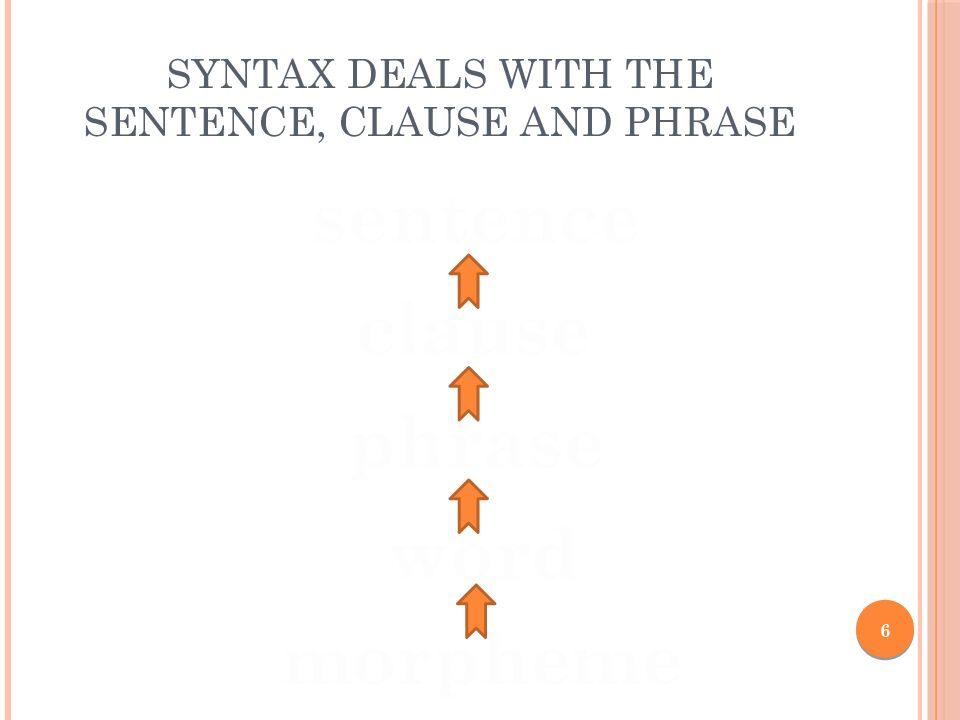
sentence clause phrase word morpheme 6
7
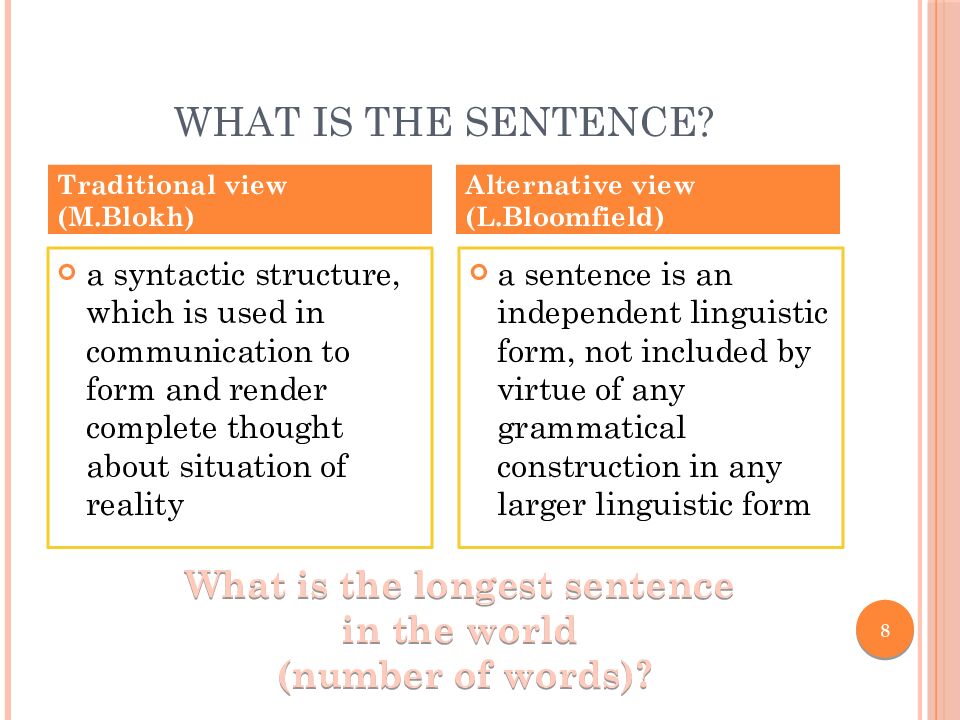
a syntactic structure, which is used in communication to form and render complete thought about situation of reality a sentence is an independent linguistic form, not included by virtue of any grammatical construction in any larger linguistic form Traditional view ( M.Blokh ) Alternative view ( L.Bloomfield ) What is the longest sentence in the world (number of words)? 8
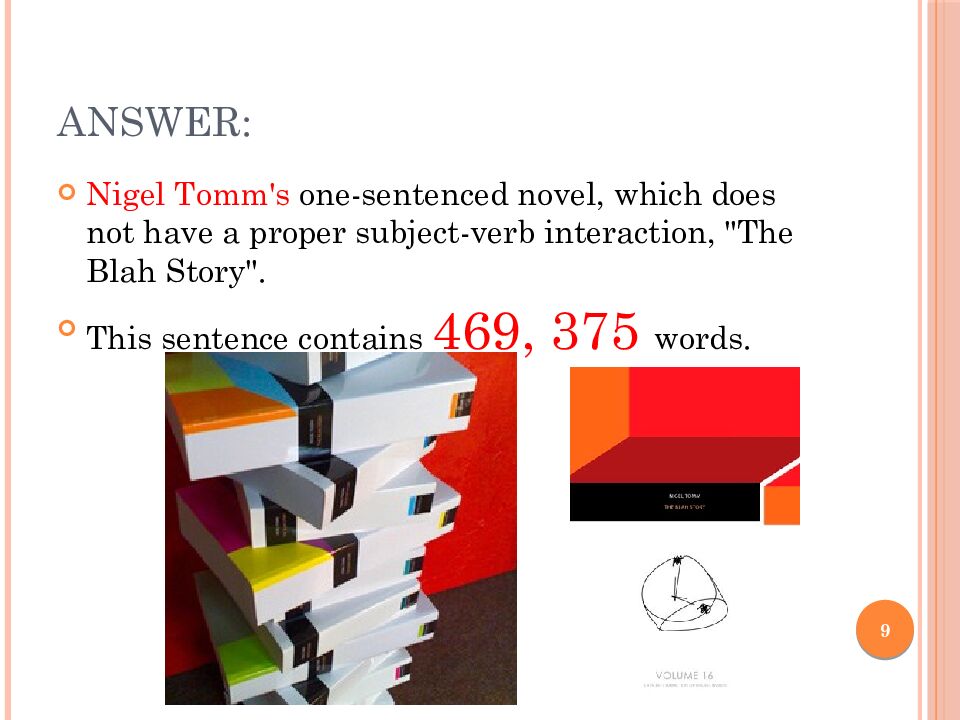
Nigel Tomm's one-sentenced novel, which does not have a proper subject-verb interaction, "The Blah Story". This sentence contains 469, 375 words. 9
The clause is the smallest grammatical unit that can express a complete proposition/predication. Simple sentence = 1 clause She is dancing. Complex sentence = 1-2 etc. clauses [She is dancing] (the way she likes). [ ] – main clause ( ) – subordinate cause Compound sentence = 1-2 etc. clauses [She is dancing] [and she is happy]. [ ] – main clause [ ] – main clause 10

The phrase is a group of words or a single word with functional words that form a constituent. (traditional view) 11
Has full predication Is the part of the clause/sentence Expresses complete thought Has intonation Does not express the complete thought Is the part of the text/ is isolated Does not have any intonation Has incomplete predication 12
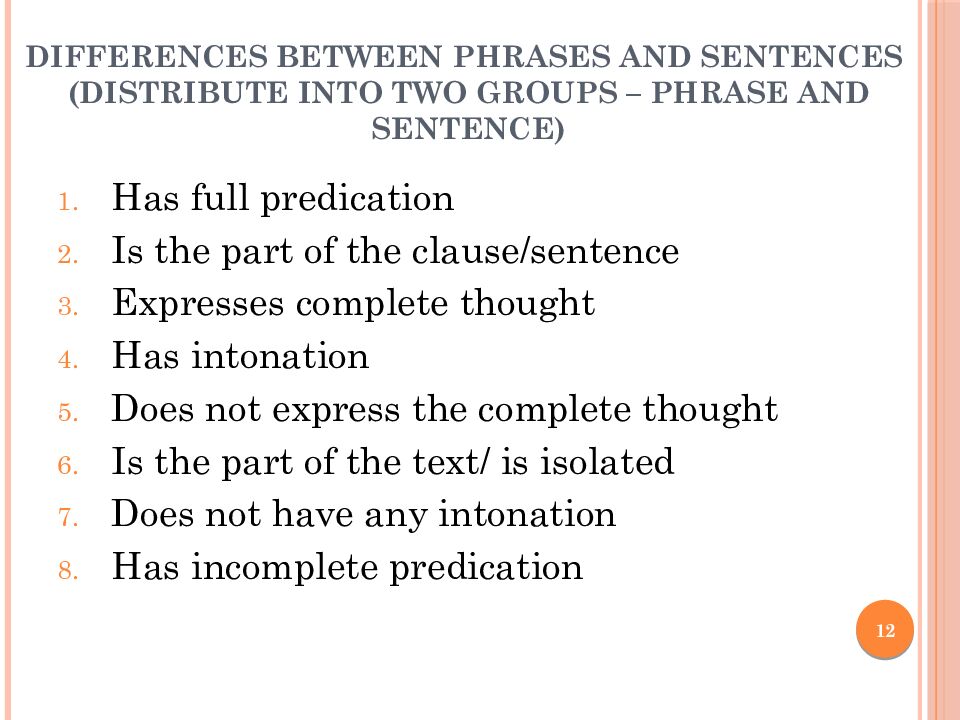
1 Has full predication 3 Expresses complete thought 4 Has intonation 6 Is the part of the text/isolated. 8 Has incomplete predication 5 Does not express the complete thought 7 Does not have any intonation 2 Is the part of the clause/sentence Sentence Phrase 13
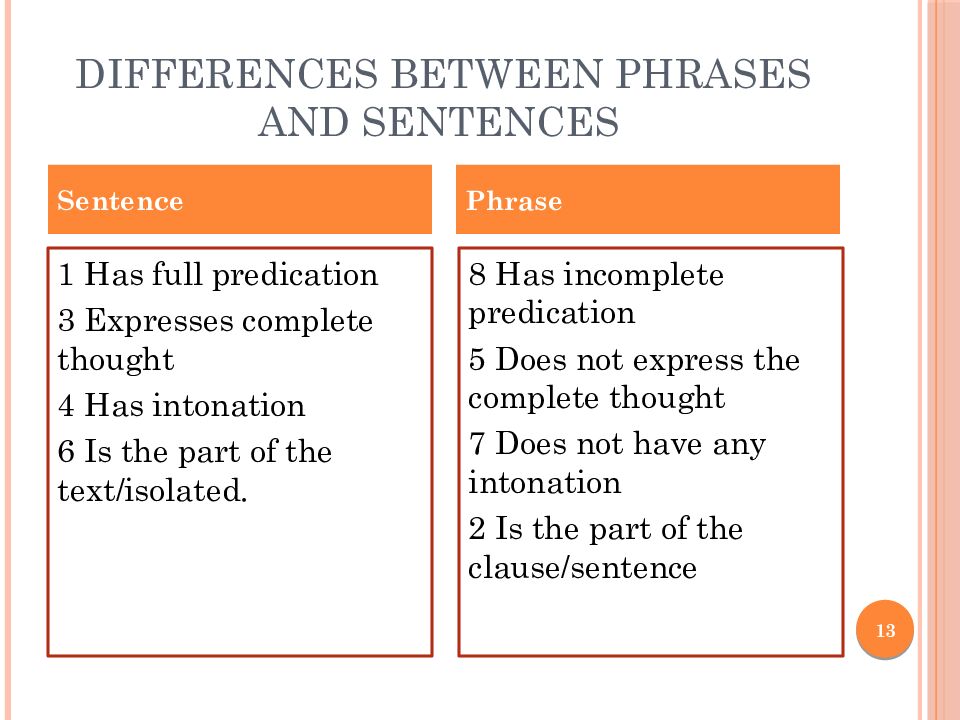
I enjoy the party. They insisted on my staying home. Harry is a wonderful singer who is famous in his land. I don’t hear the sound which you have just pronounced. The day is getting shorter, the night is getting colder. 14
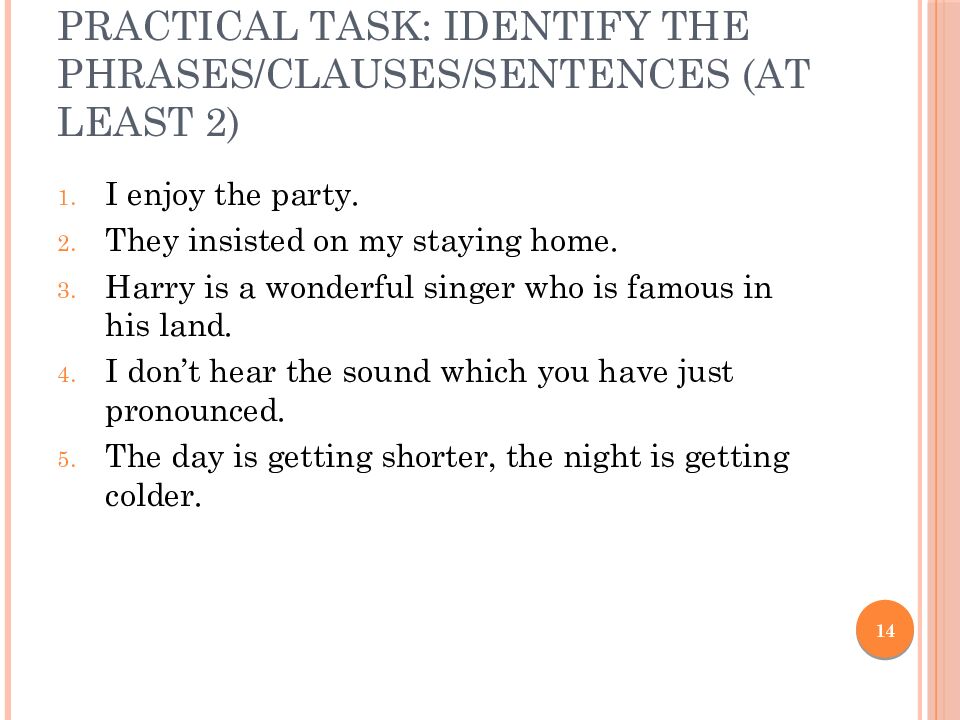
Syntax of phrase (minor syntax) Syntax of sentence (major syntax) 15
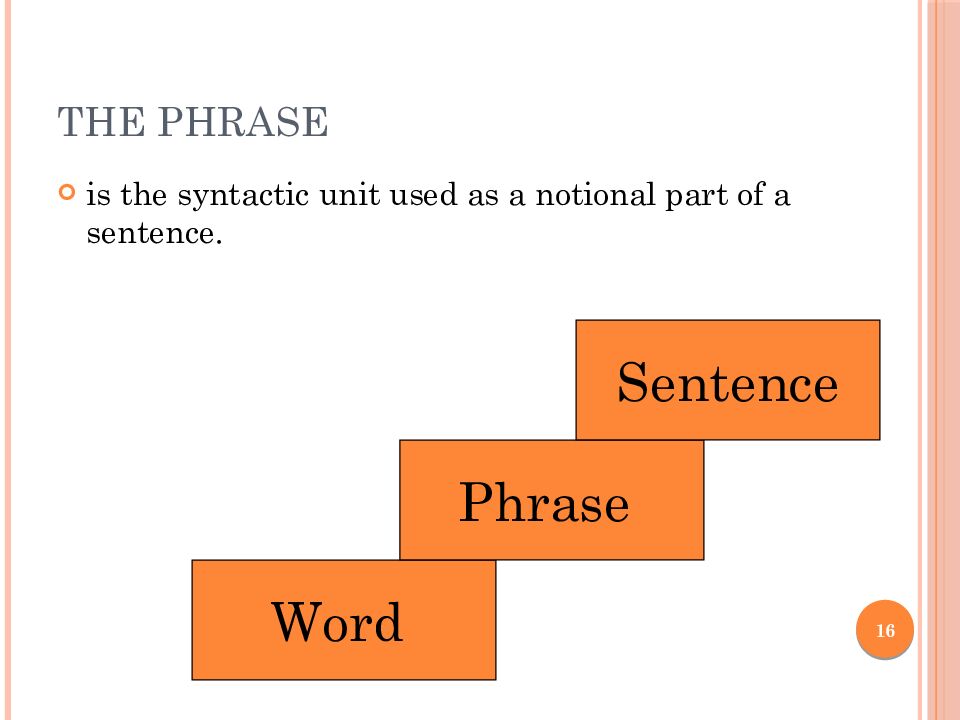
is the syntactic unit used as a notional part of a sentence. Word Phrase Sentence 16
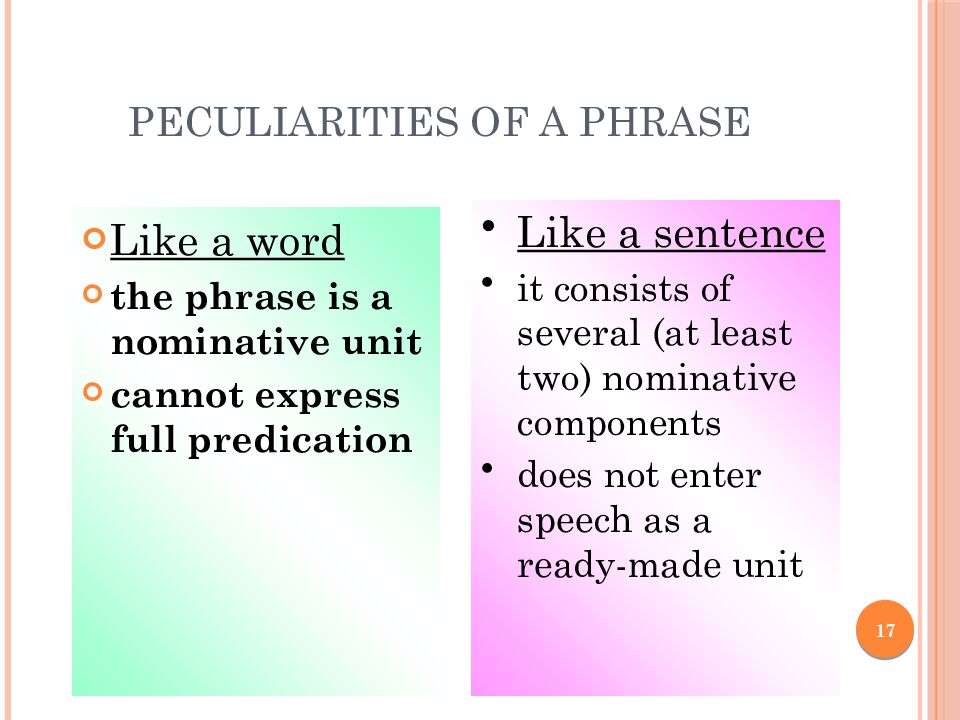
Like a word the phrase is a nominative unit cannot express full predication Like a sentence it consist s of several ( at least two ) nominative components does not enter speech as a ready-made unit 17
V.V. Vinogradov : only a combination of two notional words, one of which dominates the other, is considered a word-combination. 18
word-combination i s any syntactically organized group of syntagmatically connected words ; this includes combinations of functional and notional words, and predicative and coordinative combinations of words. 19
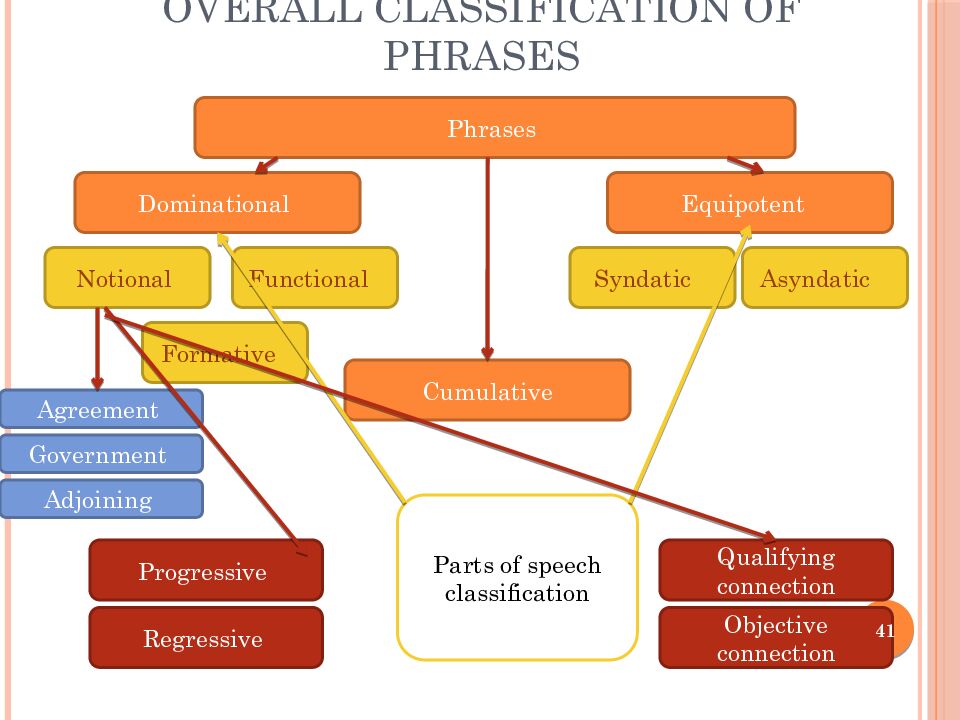
Phrases Dominational Equipotent Notional Formative Functional Syndatic Asyndatic Cumulative Agreement Government Adjoining Progressive Regressive Parts of speech classification Qualifying connection Objective connection 20
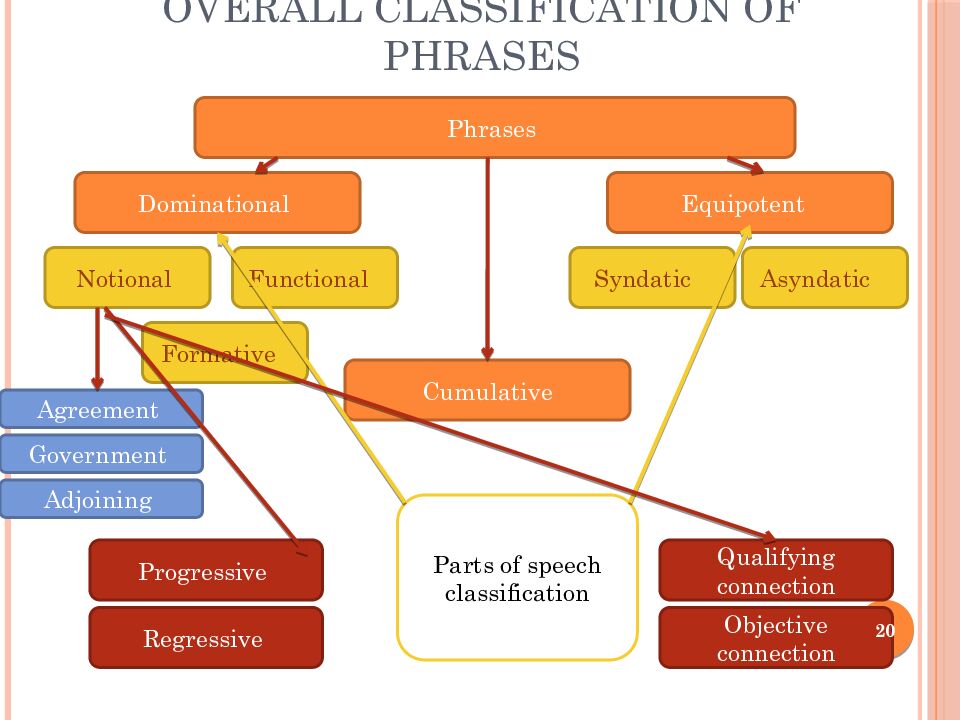
Notional phrase Formative phrase Functional phrase 21
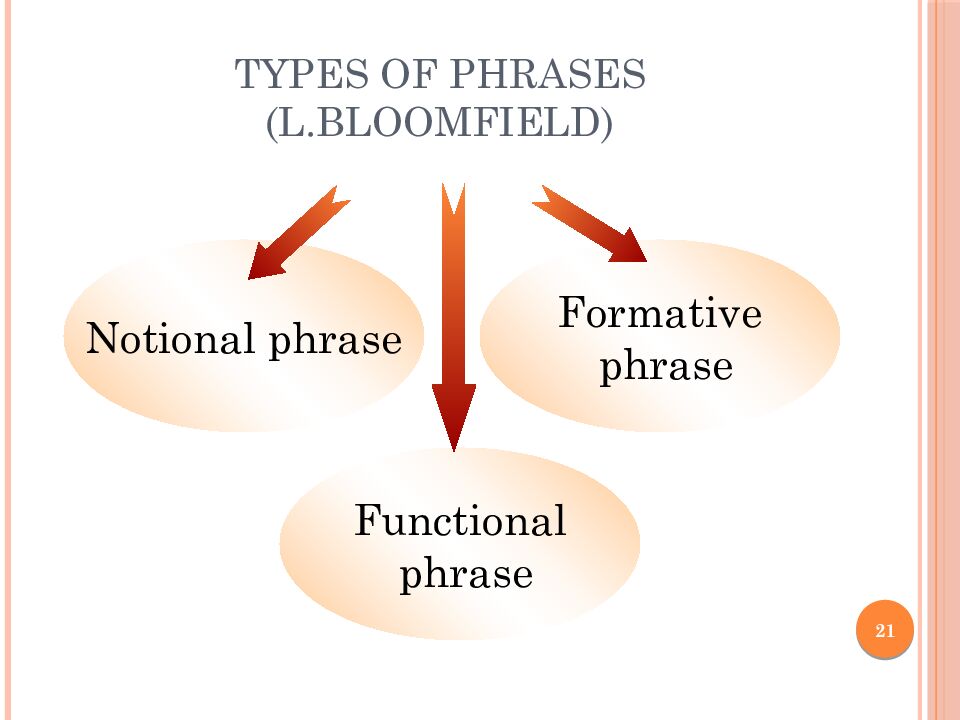
semantically independent (“ autosemantic ”) combinations of notional words, as the basic type of phrasemes. Ex: A beautiful girl Very nice Three flowers N+N 22
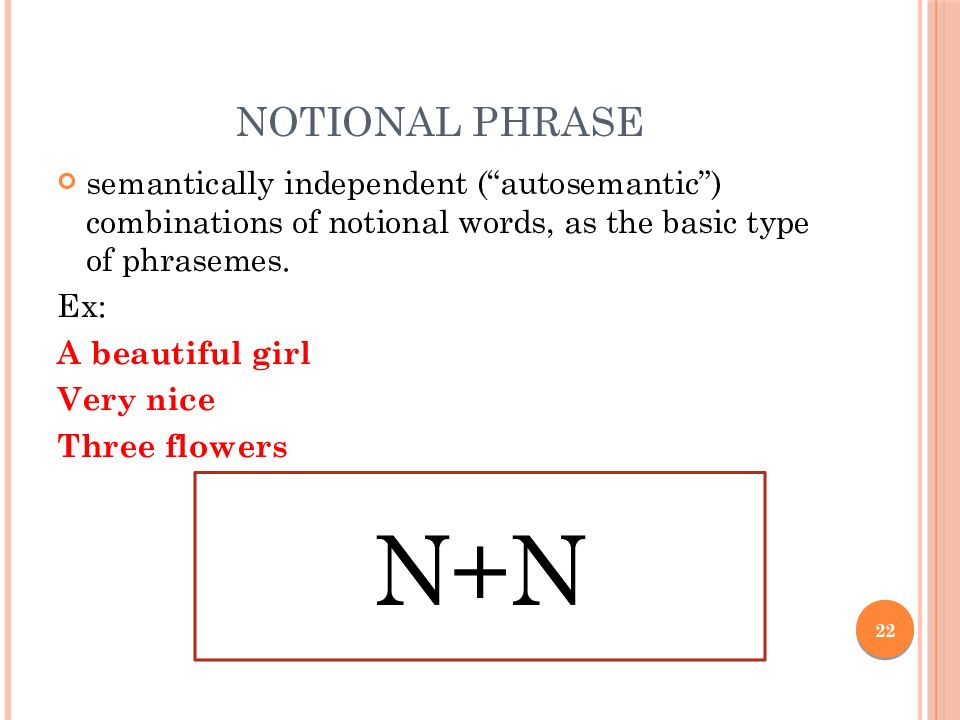
is a combination of a notional word with a functional word, which is contextually dependent (“ synsemantic ”) and functionally similar to separate notional words used in various grammatical forms. Ex : of Peter (= Peter’s ); in a moment, without doubt N+F 23
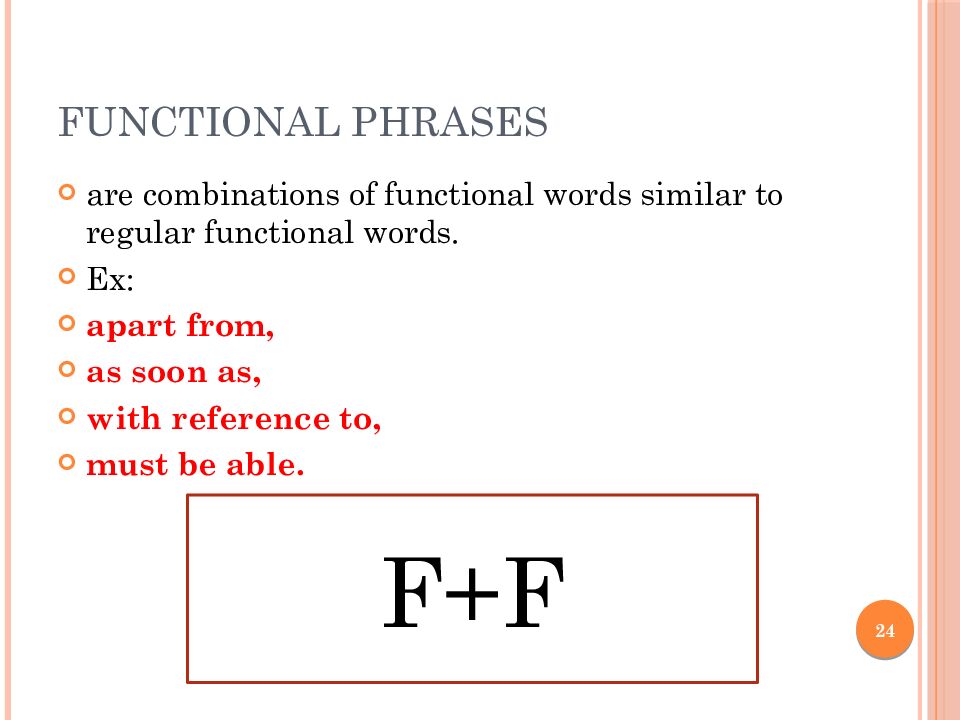
are combinations of functional words similar to regular functional words. Ex: apart from, as soon as, with reference to, must be able. F+F 24
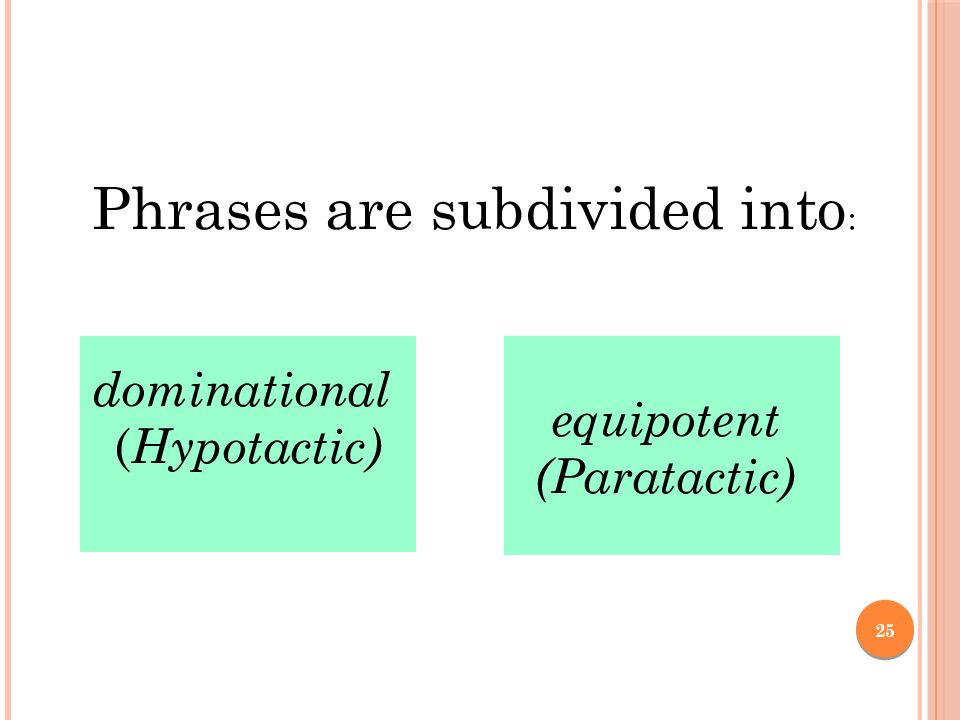
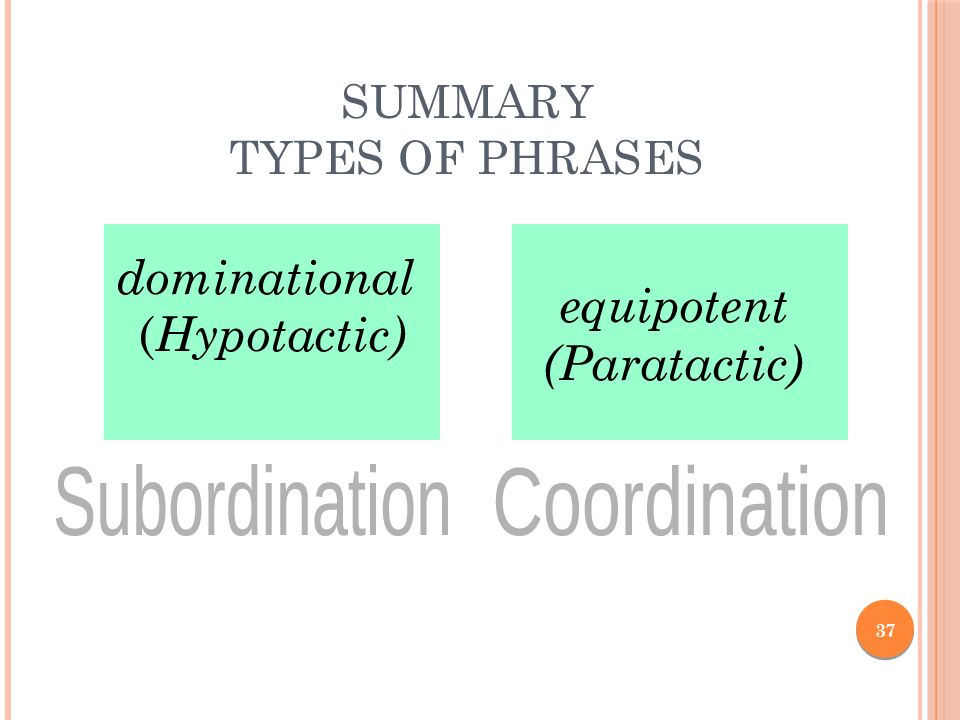
P hrases are subdivided into : dominational ( H ypotactic ) equipotent ( Paratactic ) 25
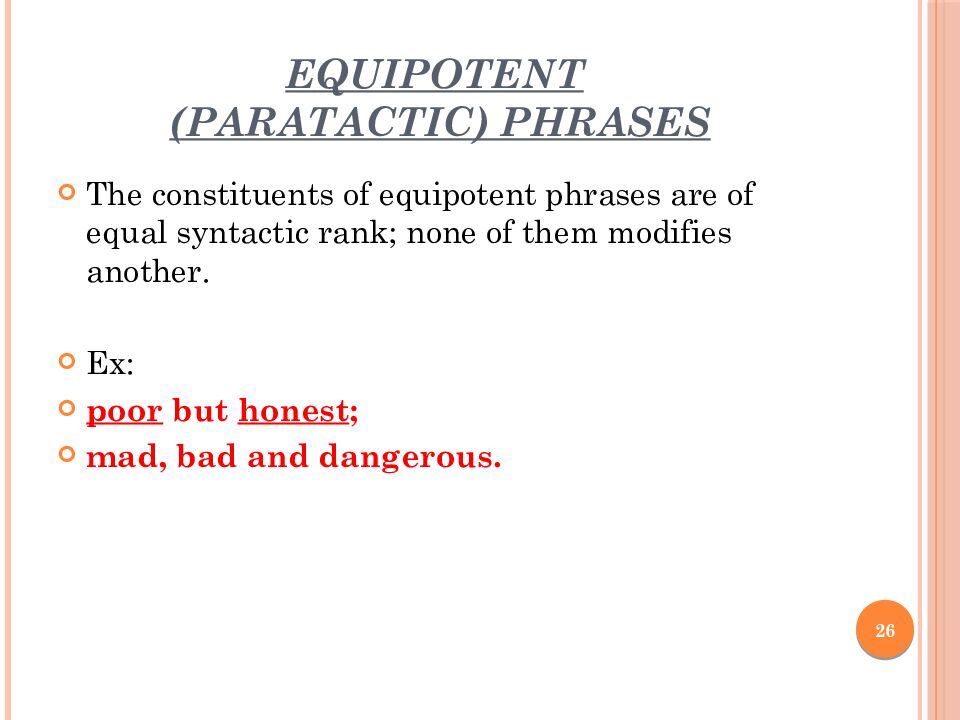
The constituents of equipotent phrases are of equal syntactic rank ; none of them modifies another. Ex : poor but honest ; mad, bad and dangerous. 26
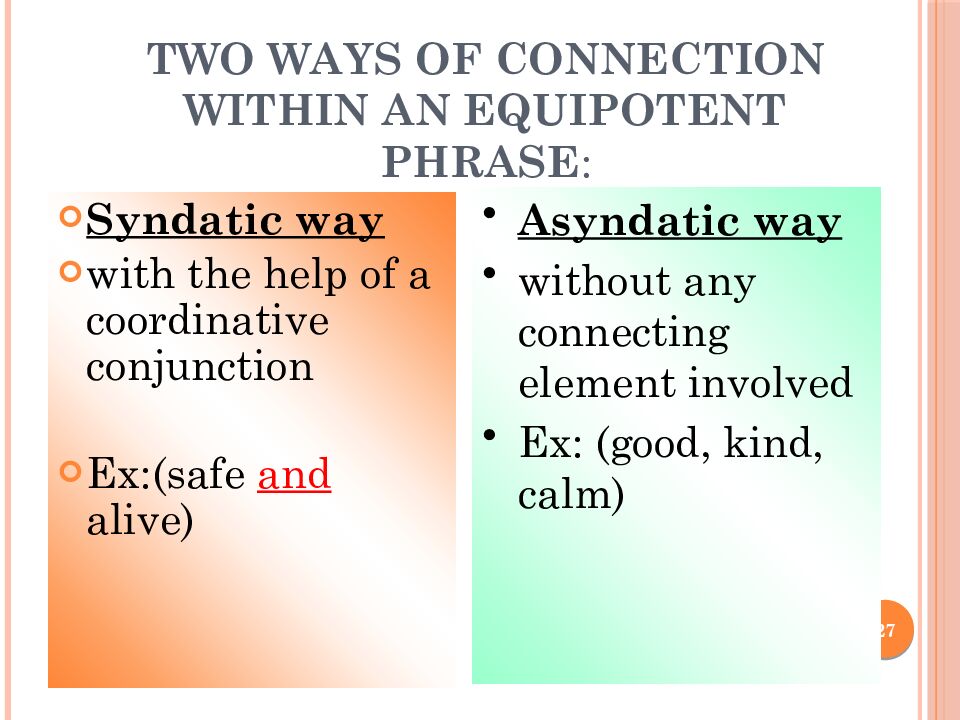
Syndatic way with the help of a coordinative conjunction Ex:(safe and alive) Asyndatic way without any connecting element involved Ex: (good, kind, calm) 27
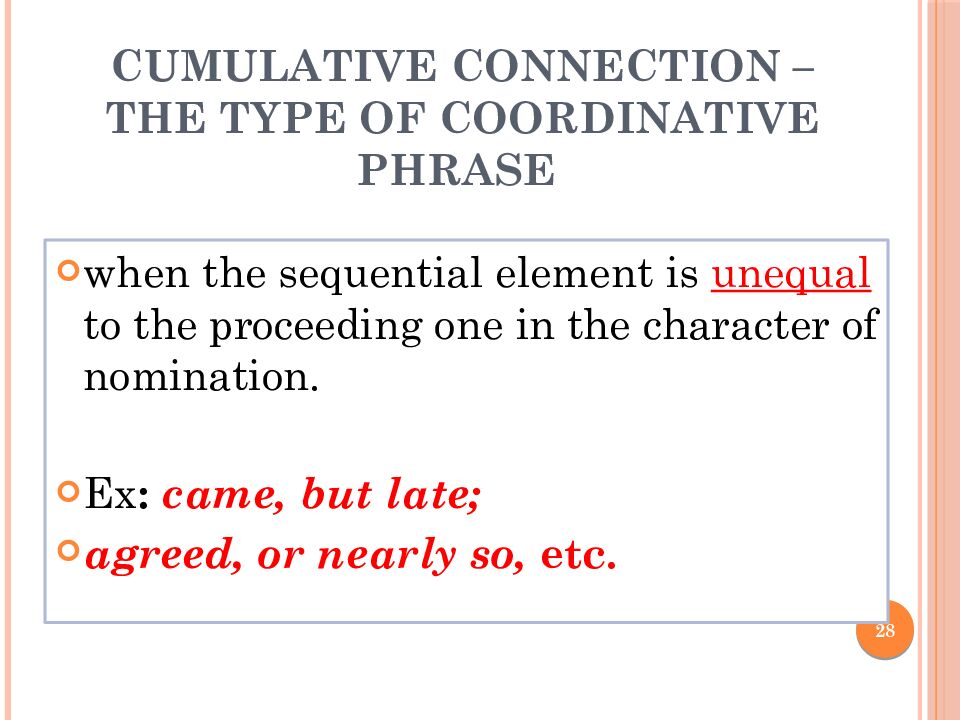
when the sequential element is unequal to the proceeding one in the character of nomination. Ex : came, but late ; agreed, or nearly so, etc. 28
comma or a hyphen (, or -) 29
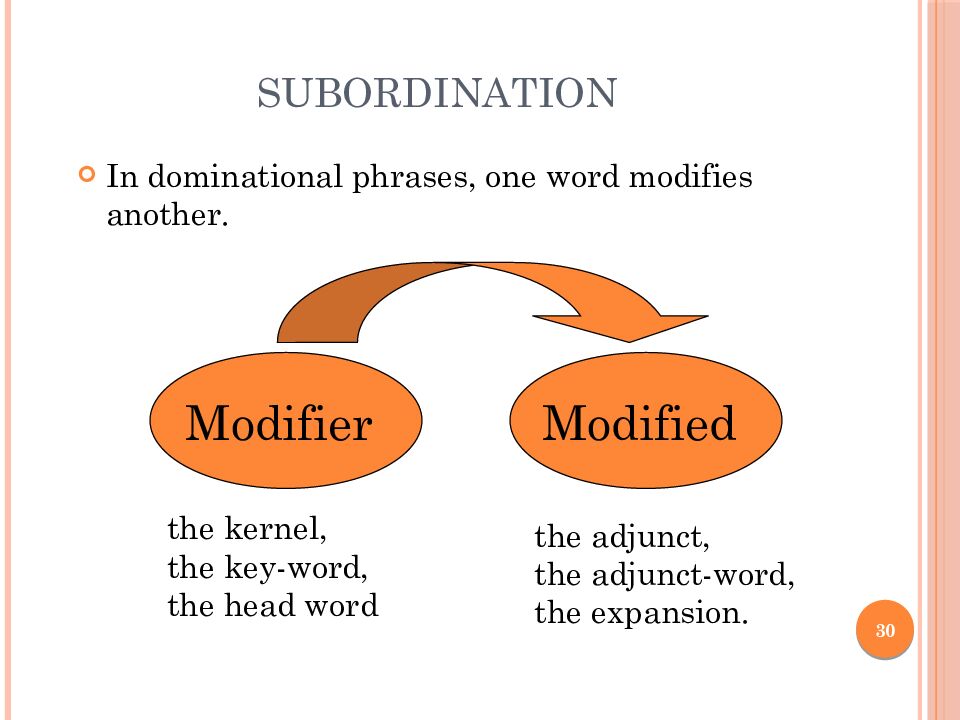
In dominational phrases, one word modifies another. Modifier Modified the kernel, the key-word, the head word the adjunct, the adjunct-word, the expansion. 30
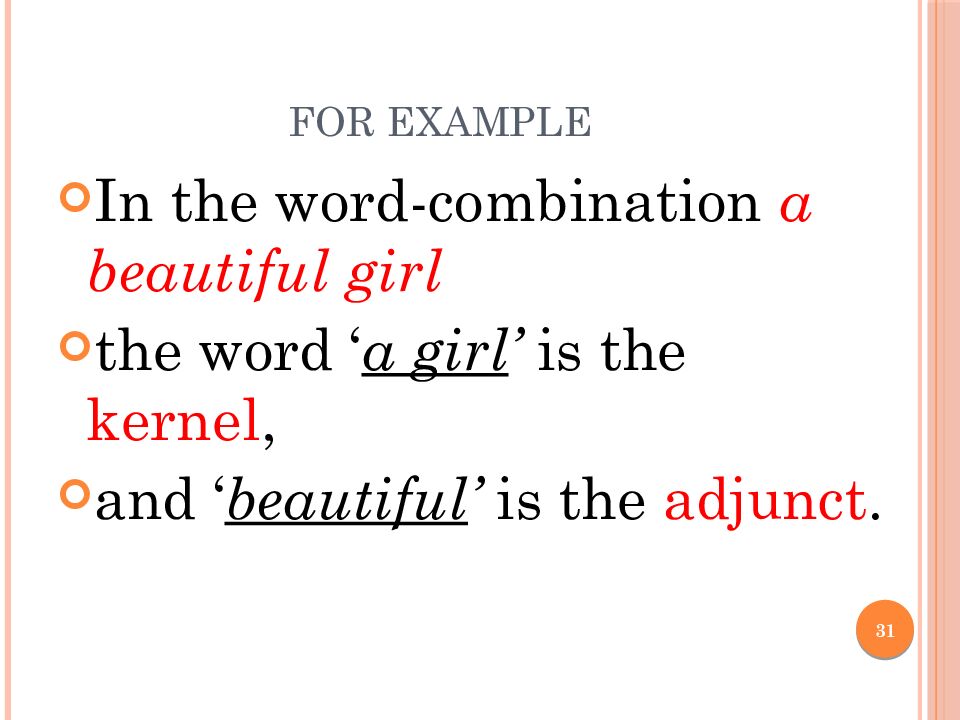
I n the word-combination a beautiful girl the word ‘ a girl ’ is the kernel, and ‘ beautiful ’ is the adjunct. 31
Grammatical agreement Government Adjoining 32
Agreement takes place when the subordinate word assumes a form similar to the form of the kernel, Ex : this boy, these boys ; the child plays, the children play ; !!!! in English, words agree only in number in some grammatical contexts. 33
Government takes place when a certain form of adjunct is required by its head-word, but it does not coincide with the form of the head word, Ex : to see him ; to talk to him. 34
Adjoining involves no special formal mark of dependence between constituents ; words are combined by sheer contact, Ex: to go home, to thoroughly think over, the then government, an interesting question. 35
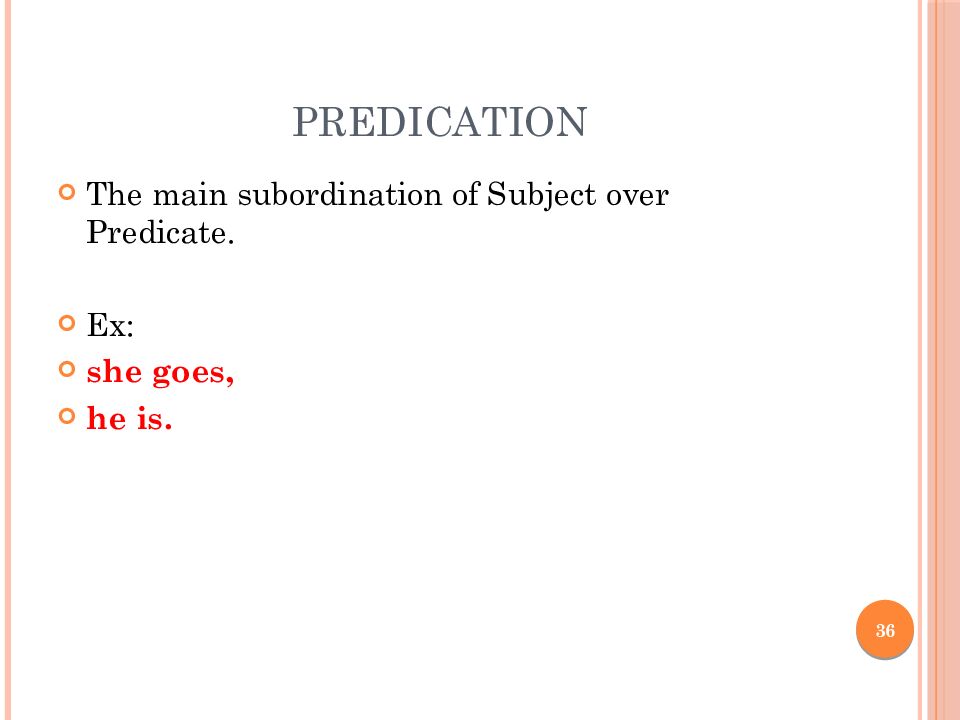
The main subordination of Subject over Predicate. Ex: she goes, he is. 36
dominational ( H ypotactic) Coordination equipotent (Paratactic ) Subordination 37
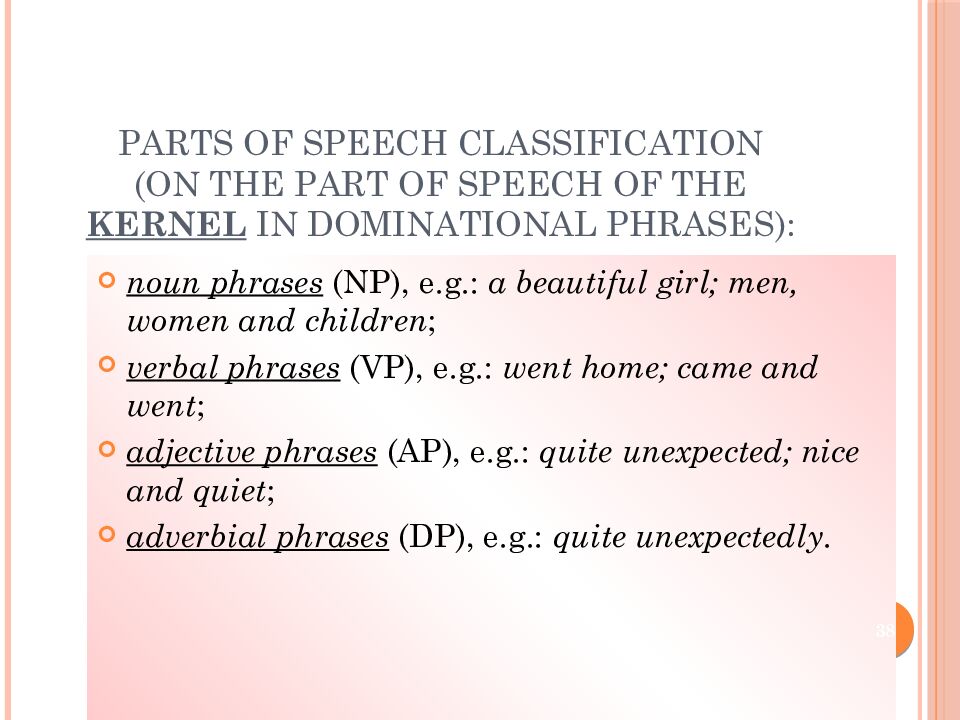
noun phrases (NP), e.g.: a beautiful girl ; men, women and children ; verbal phrases (VP), e.g.: went home ; came and went ; adjective phrases (AP), e.g.: quite unexpected ; nice and quiet ; adverbial phrases (DP), e.g.: quite unexpectedly. 38
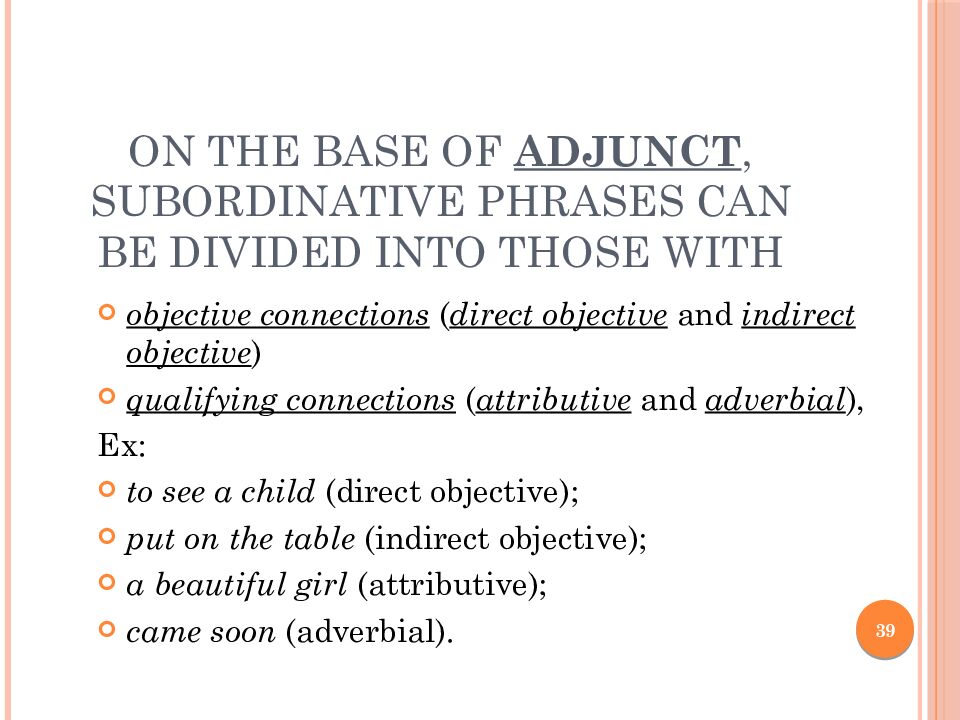
objective connections ( direct objective and indirect objective ) qualifying connections ( attributive and adverbial ), Ex : to see a child ( direct objective ); put on the table ( indirect objective ); a beautiful girl ( attributive ); came soon ( adverbial ). 39
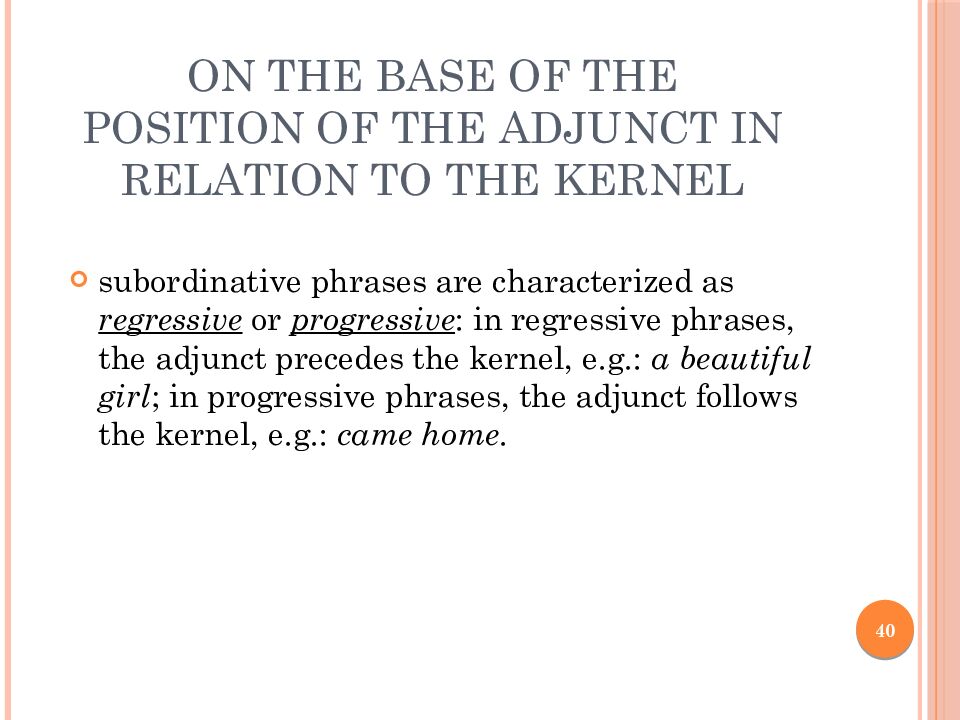
subordinative phrases are characterized as regressive or progressive : in regressive phrases, the adjunct precedes the kernel, e.g.: a beautiful girl ; in progressive phrases, the adjunct follows the kernel, e.g.: came home. 40
Phrases Dominational Equipotent Notional Formative Functional Syndatic Asyndatic Cumulative Agreement Government Adjoining Progressive Regressive Parts of speech classification Qualifying connection Objective connection 41
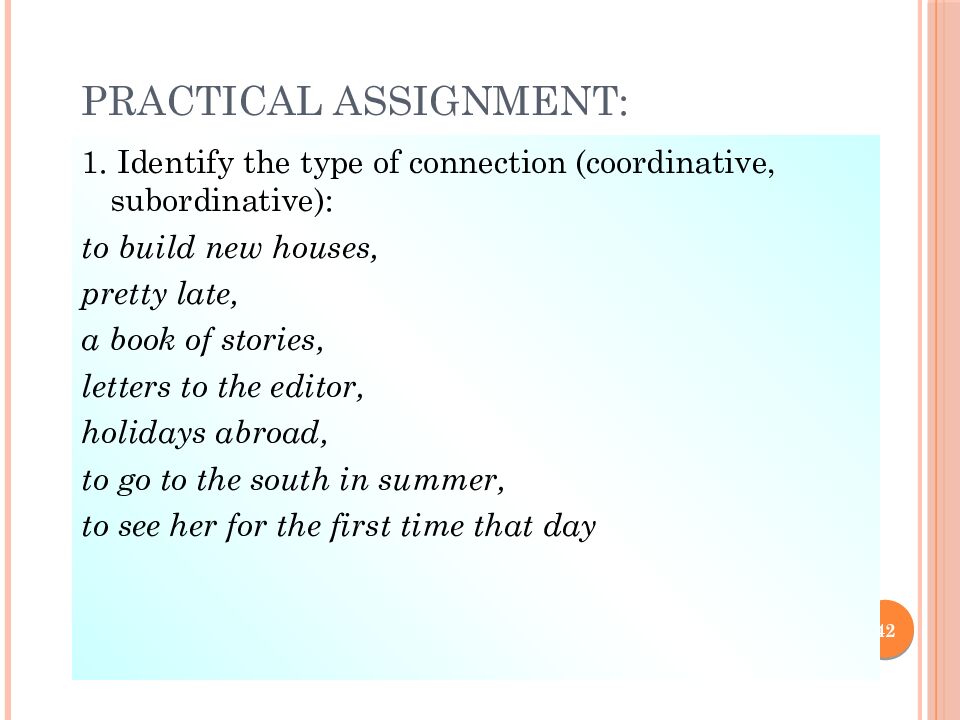
1. Identify the type of connection (coordinative, subordinative ): to build new houses, pretty late, a book of stories, letters to the editor, holidays abroad, to go to the south in summer, to see her for the first time that day 42
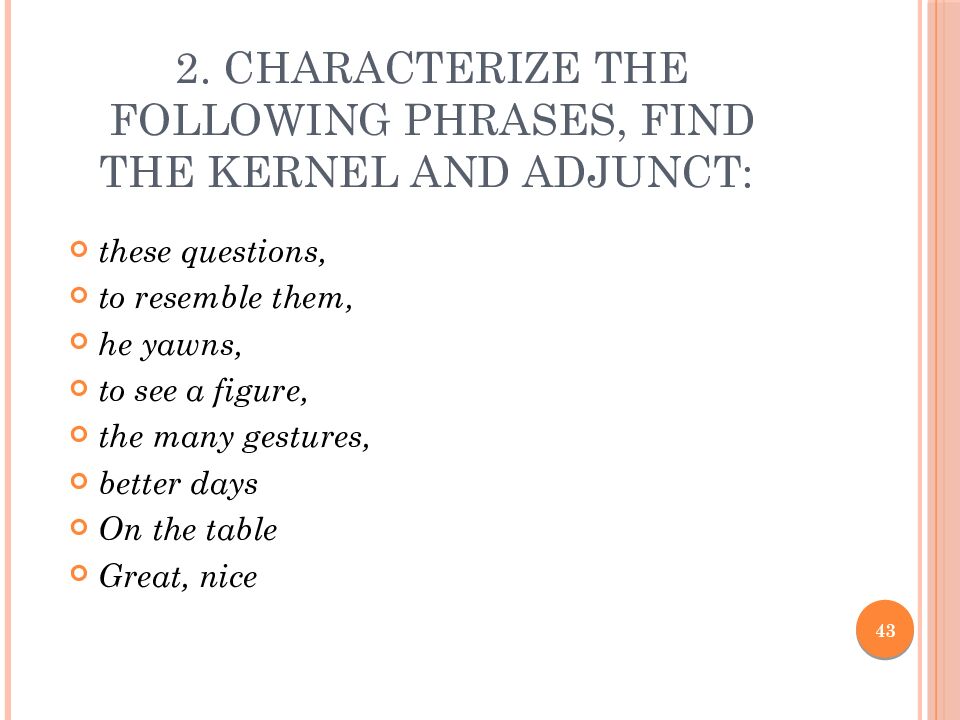
these questions, to resemble them, he yawns, to see a figure, the many gestures, better days On the table Great, nice 43