

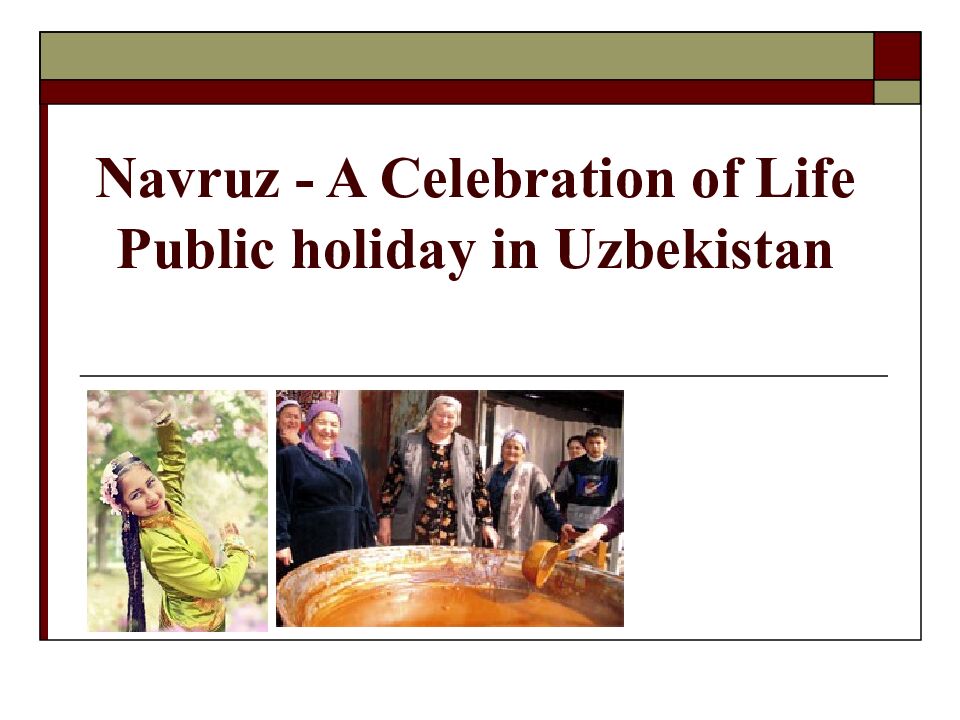
(also called Noruz, Nowruz, Nowrooz, and Nawruz), the spring "New Year" holiday, has been celebrated for at least 2,500 years, and perhaps for as long as 5,000 years. Originating in Persia and long associated with the ancient Zoroastrian religion, its name means "new day" in Farsi because for ancient Persians it marked the first day of the New Year. On this day, Persian kings would have worn a crown with images of the annual solar cycle on their heads, participated in the divine mass in the Temple of Fire, and distributed generous gifts to citizens. Navruz
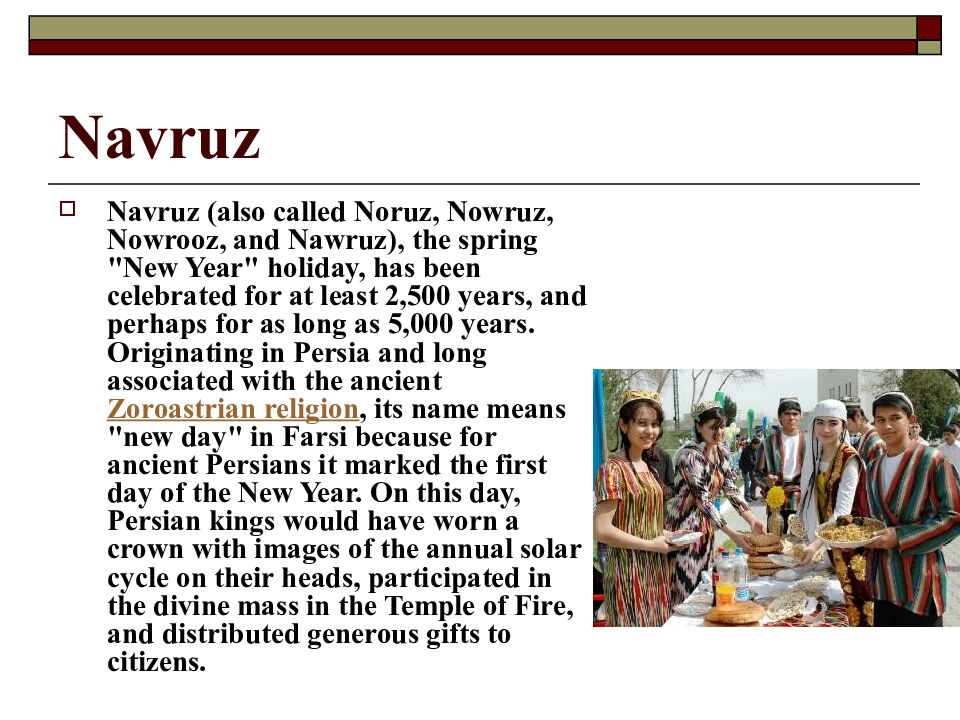
Today, Navruz is celebrated each year on March 21, when the sun enters the sign of Aries on the astrological calendar. In the northern hemisphere, this date frequently coincides with the spring equinox, the day on which the number of daylight hours equals the number of nighttime hours.
On our modern Gregorian calendar, the spring equinox varies from March 19 to March 21. Although their calendars were different, ancient peoples followed the course of the sun and moon closely, and knew that the seasons began to change on this date. For them, it was as if the powers of light had overcome the powers of darkness, allowing the earth to awaken and life to be rekindled. Many of us have similar feelings today, even though we understand the more scientific explanation: that the northern hemisphere begins to tilt toward the sun at this date, which results in longer and warmer days.
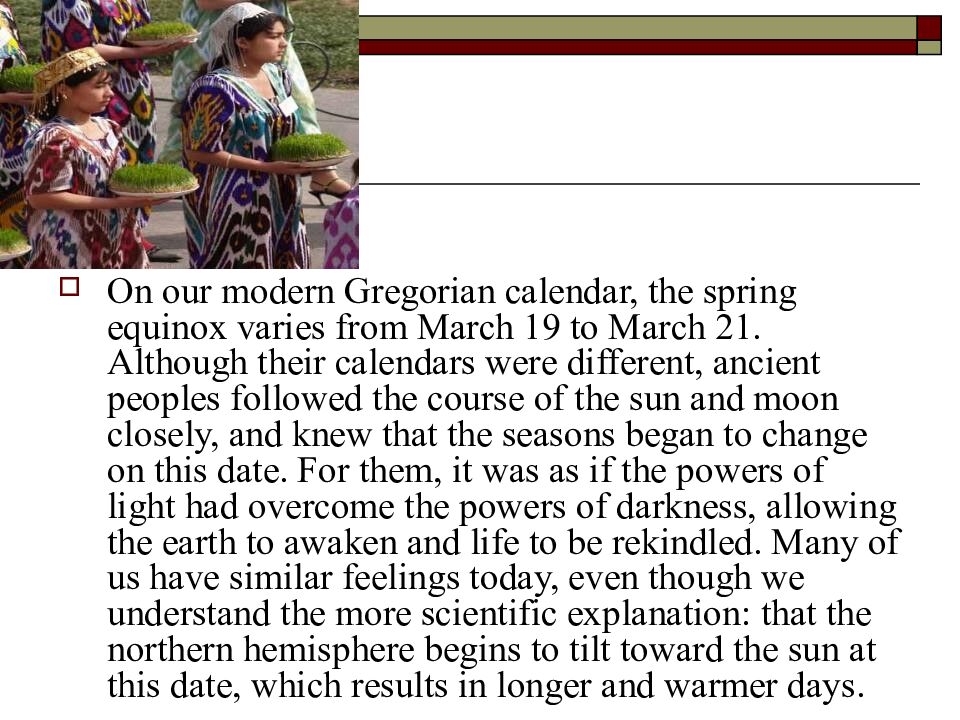
As Turks and other nomadic peoples moved into Central Asia and areas around Persia, they adopted the celebration of Navruz. Just as the Saxon holiday of Ostara was embraced by Christianity and become Easter in the West, Navruz traditions, which had grown strong roots in the life of Eurasian farmers and townspeople, survived the coming of Islam to the area 1.400 years ago.
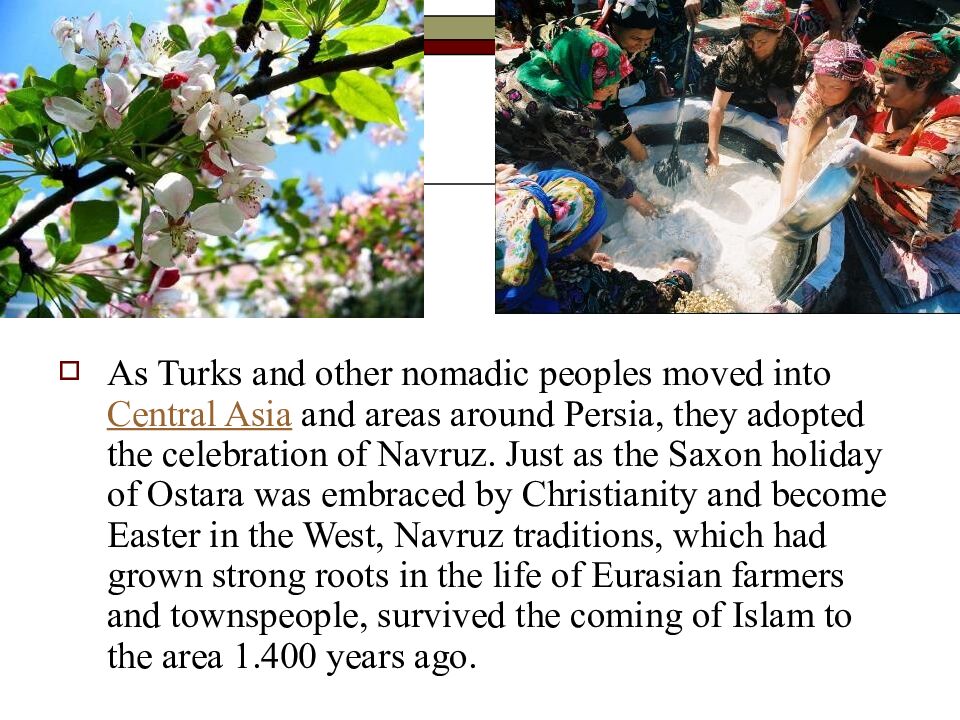
Today, Navrus is celebrated widely and colorfully in Iran, Azerbaijan, Afghanistan, Uzbekistan, Tajikistan, Kyrgyzstan, Kazakhstan, Turkmenistan and the western provinces of China, as well as the Kurds in Turkey, Syria and Iraq and the Tatars and Bashkirs in southern Russia. In the last ten years, the Central Asian republics have recognized Navruz as an official holiday. Its celebration is marked by concerts in parks and squares, trade fairs and national horseracing competitions.

Celebrations of spring are a natural outgrowth of the Earth's rhythms. In most of the Silk Road countries, Navruz announces the joyful awakening of nature after winter and the beginning of the agricultural cycle of cultivating, planting, and harvesting. Navruz traditions are similar throughout the region, and have varied little over the centuries, except to embrace Islam. Unlike the western New Year traditions, Navruz is celebrated during daytime hours within the family circle.
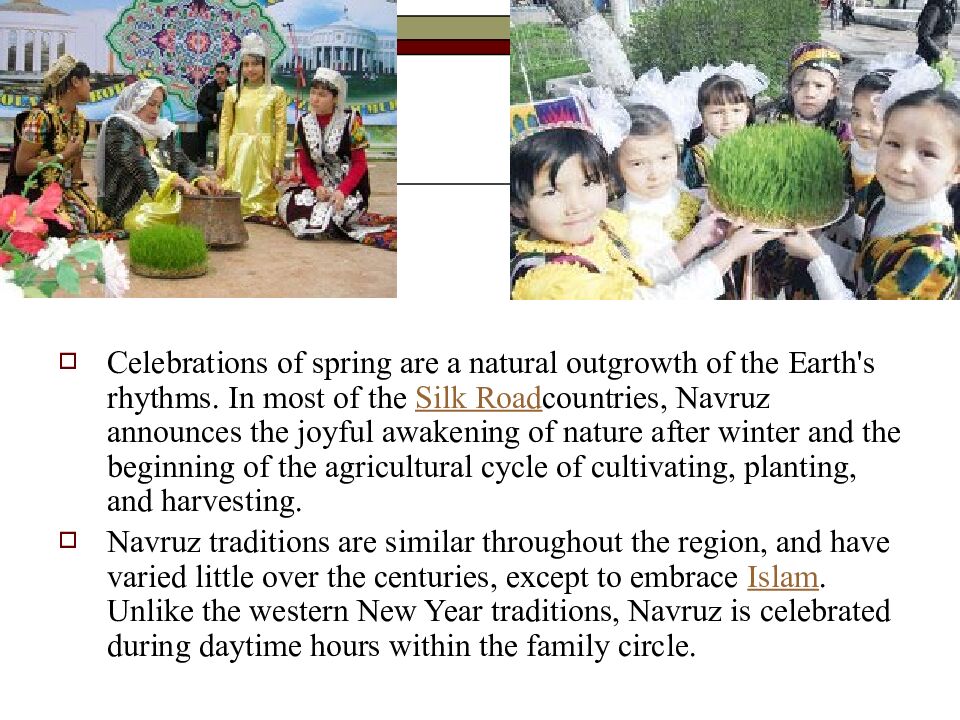
March 21 is the main celebration, but for the next 13 days it is common practice to visit friends and relatives, buy and plant seedlings of fruit trees and have cheerful gatherings in the fresh spring air. Traditionally, it is also a time to "clean up" one's life. People tidy up their homes, wash rugs and draperies, decorate with flowers, and buy new clothes that they will use for visiting. On the day of Navruz, all housekeeping - including the preparation of the meal, careful cleaning of the home and the arrangement of blossoming branches from apricot, peach, almond or pomegranate trees - must be completed before the rising of the morning star.
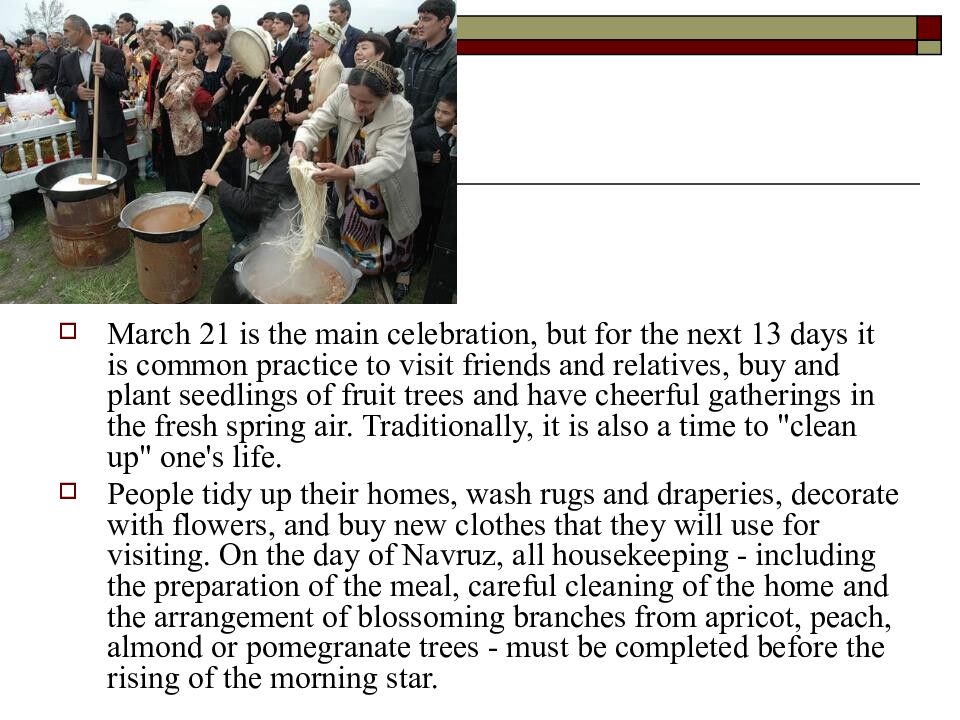
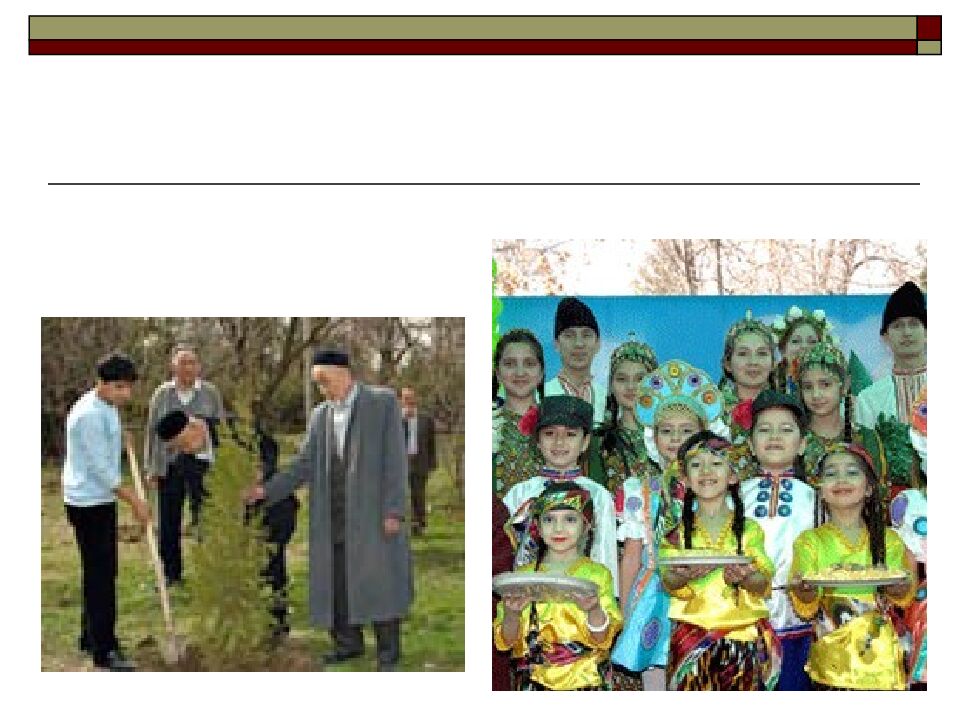
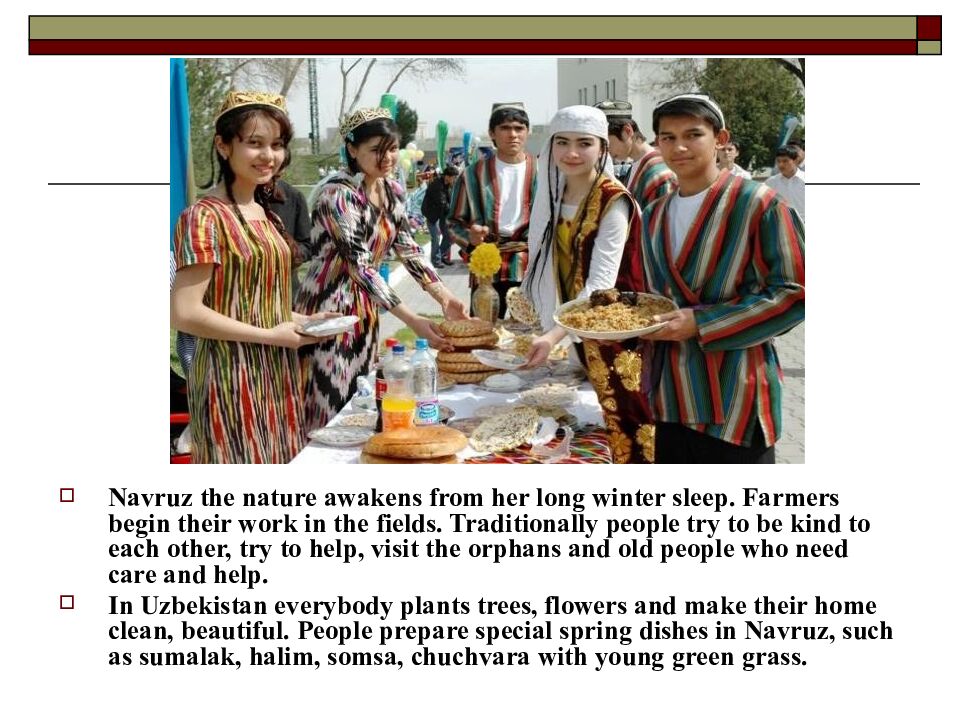
Navruz the nature awakens from her long winter sleep. Farmers begin their work in the fields. Traditionally people try to be kind to each other, try to help, visit the orphans and old people who need care and help. In Uzbekistan everybody plants trees, flowers and make their home clean, beautiful. People prepare special spring dishes in Navruz, such as sumalak, halim, somsa, chuchvara with young green grass.