

Degrees of comparison of adverbs
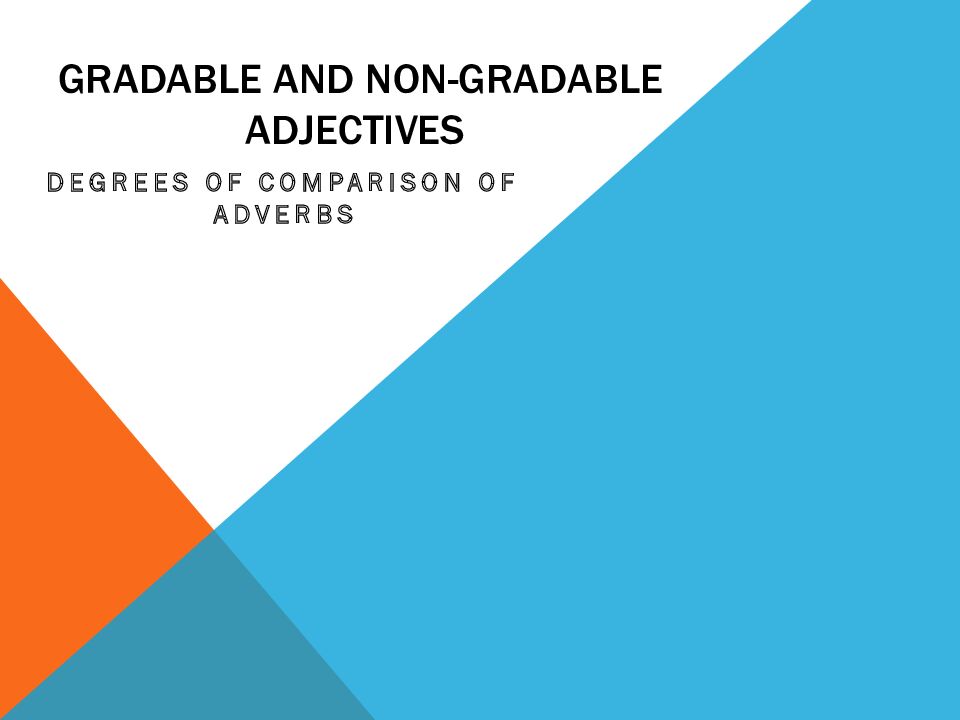
Gradable Adjectives very rather a bit slightly extremely really pretty quite Non-gradable Adjectives absolutely completely totally utterly highly really pretty quite Наречия really, pretty, quite можно употреблять с обеими группами прилагательных, но: • pretty имеет неформальный оттенок • quite меняет свое значение в зависимости от прилагательного: c gradable обозначает то же самое, что и rather (довольно таки); с non-gradable – absolutely, completely (абсолютно, совершенно)
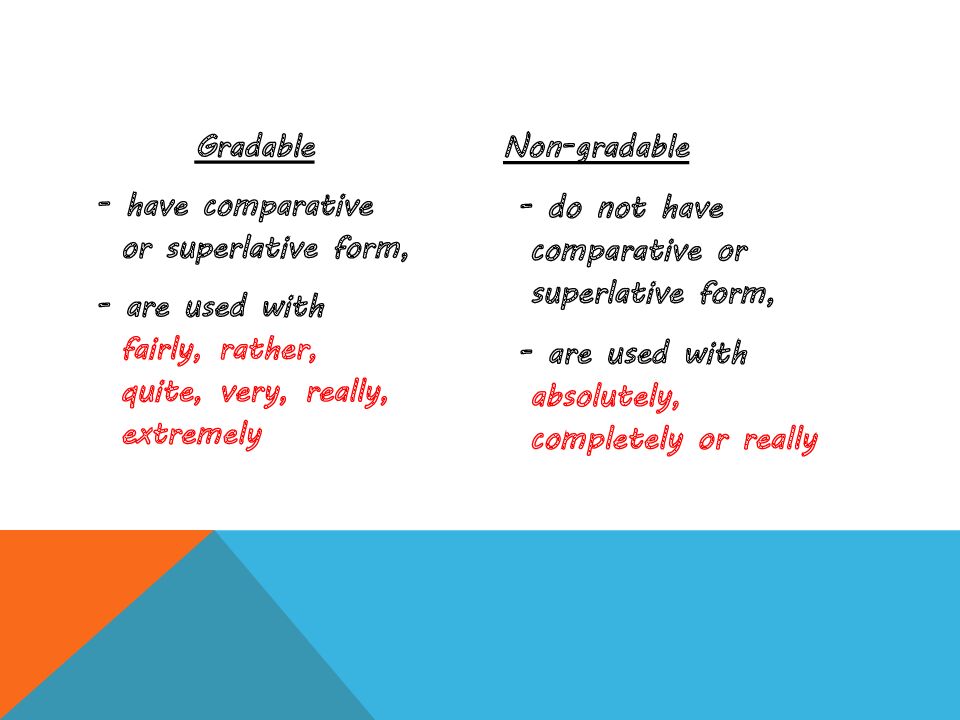
Gradable - have comparative or superlative form, - are used with fairly, rather, quite, very, really, extremely Non-gradable - do not have comparative or superlative form, - are used with absolutely, completely or really
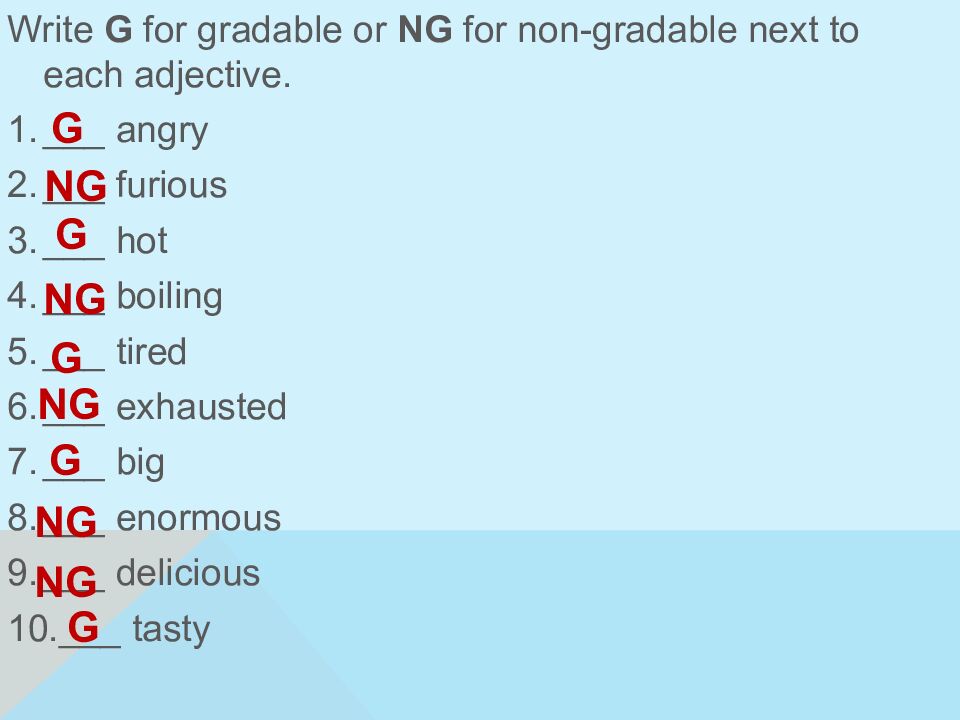
Write G for gradable or NG for non-gradable next to each adjective. ___ angry ___ furious ___ hot ___ boiling ___ tired ___ exhausted ___ big ___ enormous ___ delicious ___ tasty G NG G NG G NG G G NG NG
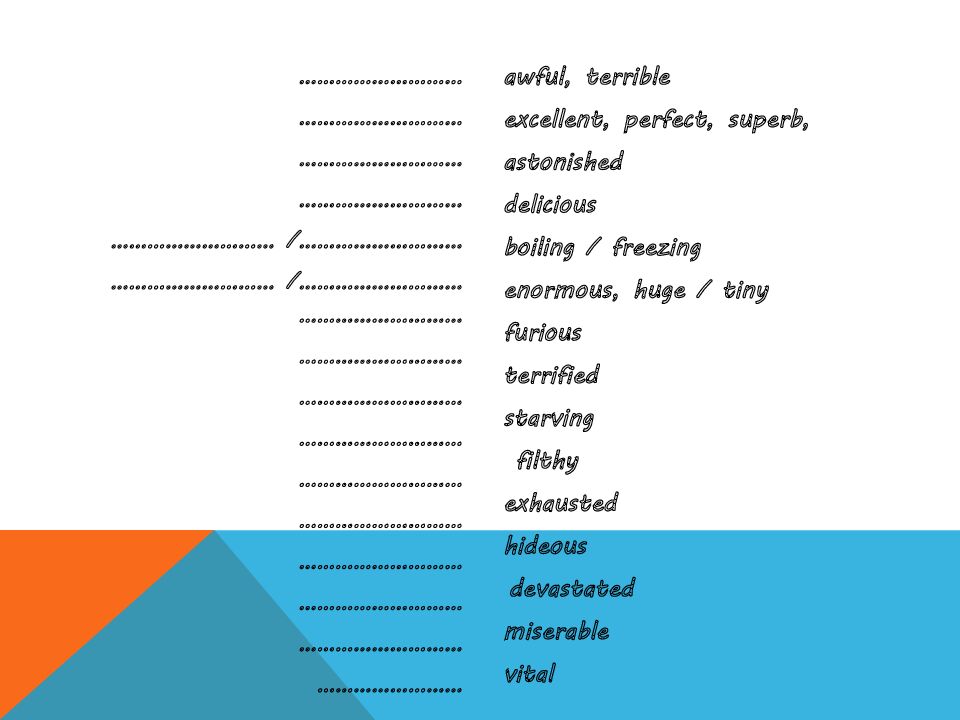
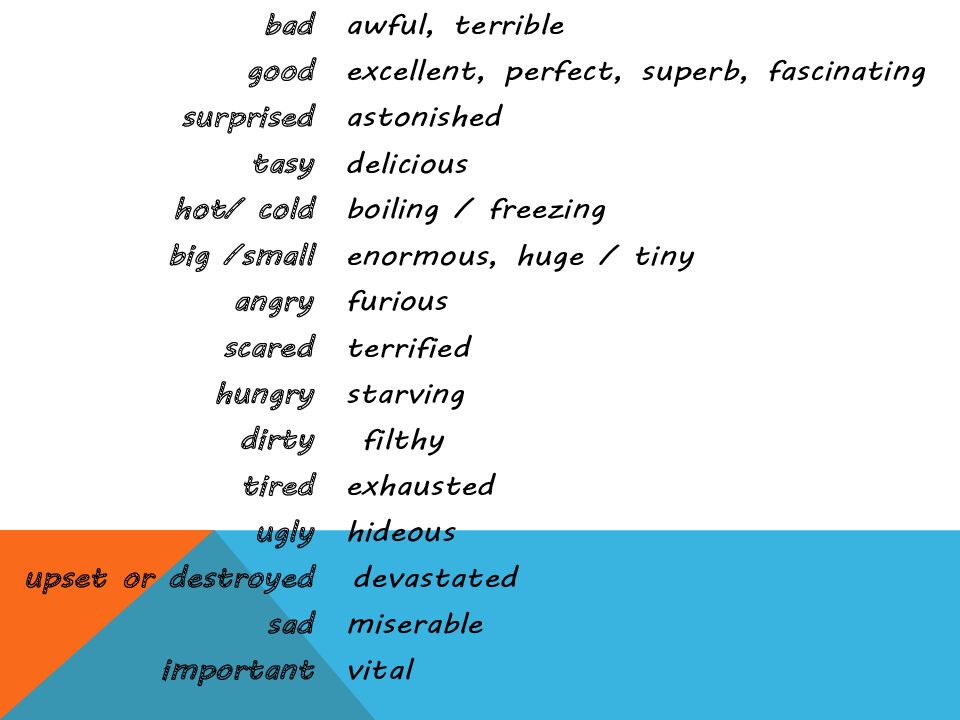
……………………… ……………………… ……………………… ……………………… ……………………… /……………………… ……………………… / ……………………… ……………………… ……………………… ……………………… ……………………… ……………………… ……………………… ……………………… ……………………… ……………………… …………………… awful, terrible excellent, perfect, superb, astonished delicious boiling / freezing enormous, huge / tiny furious terrified starving filthy exhausted hideous devastated miserable vital
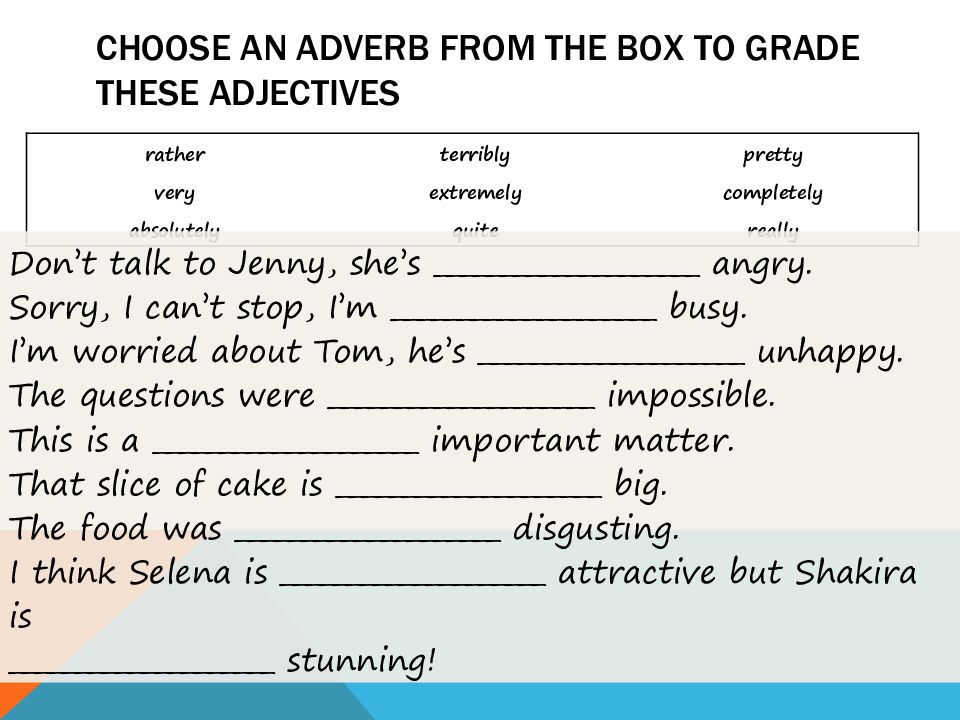
rather terribly pretty very extremely completely absolutely quite really Don’t talk to Jenny, she’s ____________________ angry. Sorry, I can’t stop, I’m ____________________ busy. I’m worried about Tom, he’s ____________________ unhappy. The questions were ____________________ impossible. This is a ____________________ important matter. That slice of cake is ____________________ big. The food was ____________________ disgusting. I think Selena is ____________________ attractive but Shakira is ____________________ stunning!
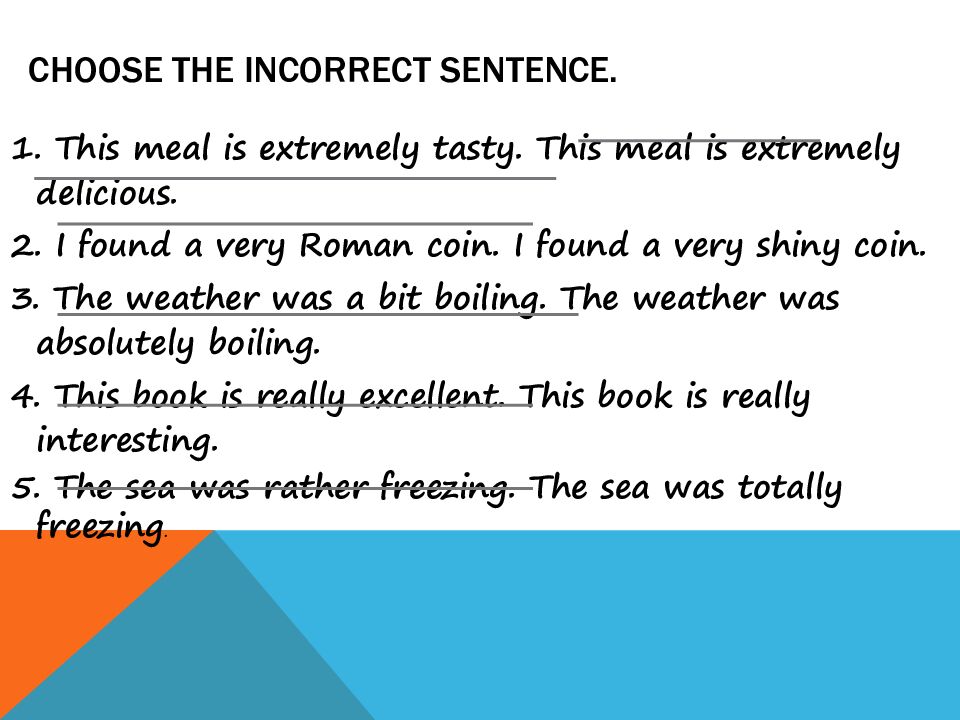
1. This meal is extremely tasty. This meal is extremely delicious. 2. I found a very Roman coin. I found a very shiny coin. 3. The weather was a bit boiling. The weather was absolutely boiling. 4. This book is really excellent. This book is really interesting. 5. The sea was rather freezing. The sea was totally freezing.
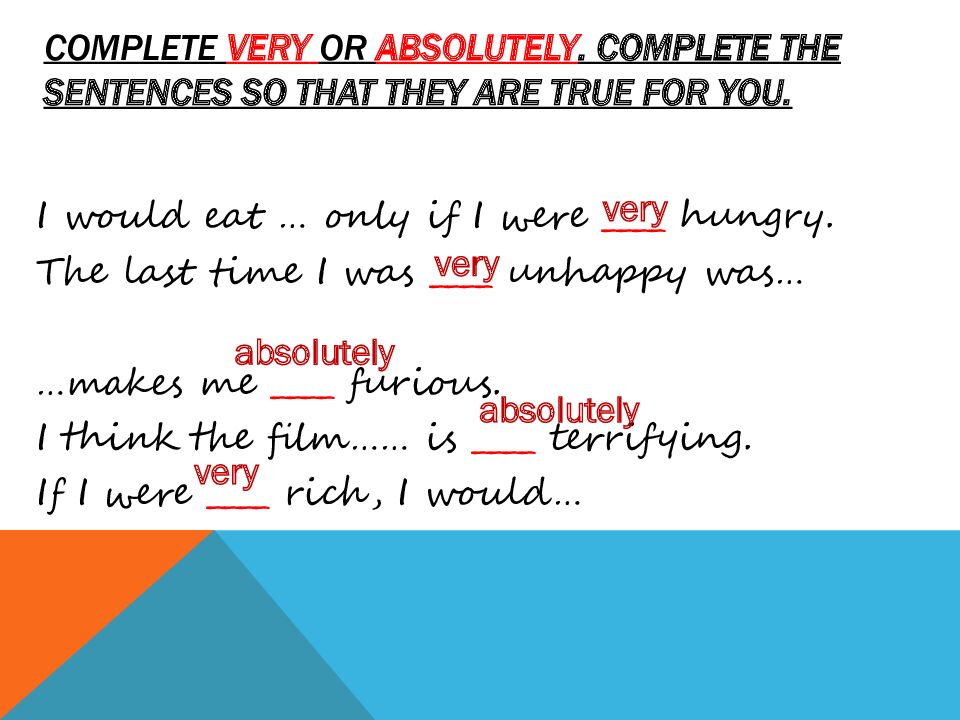
I would eat … only if I were ____ hungry. The last time I was ____ unhappy was … … makes me ____ furious. I think the film …… is ____ terrifying. If I were ____ rich, I would… very very absolutely absolutely very
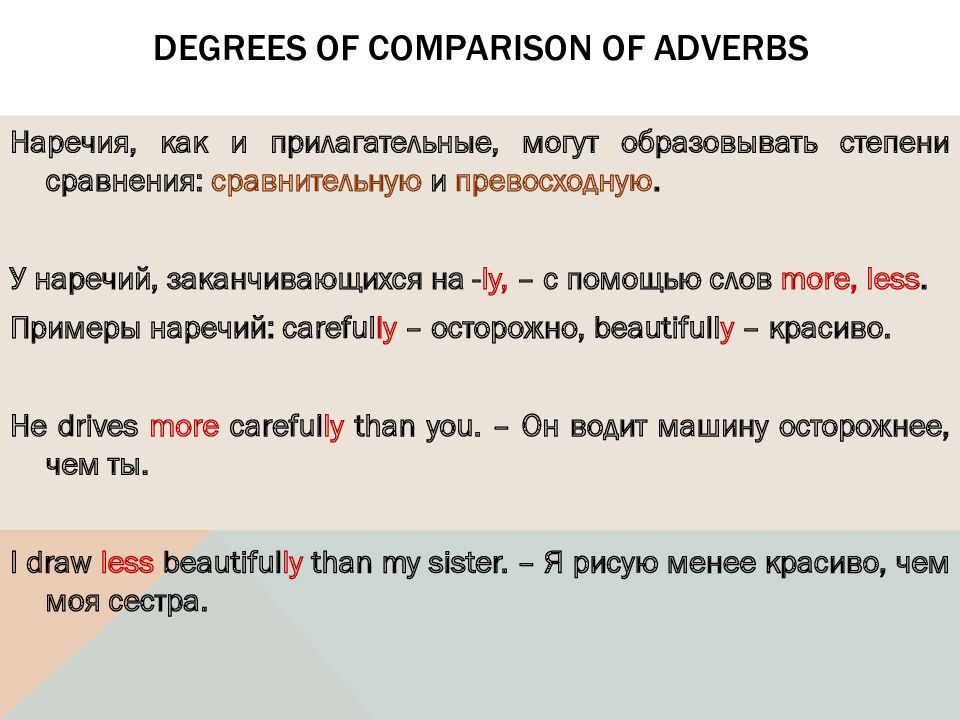
Наречия, как и прилагательные, могут образовывать степени сравнения: сравнительную и превосходную. У наречий, заканчивающихся на - ly, – с помощью слов more, less. Примеры наречий: careful ly – осторожно, beautifull y – красиво. He drives more careful ly than you. – Он водит машину осторожнее, чем ты. I draw less beautiful ly than my sister. – Я рисую менее красиво, чем моя сестра.
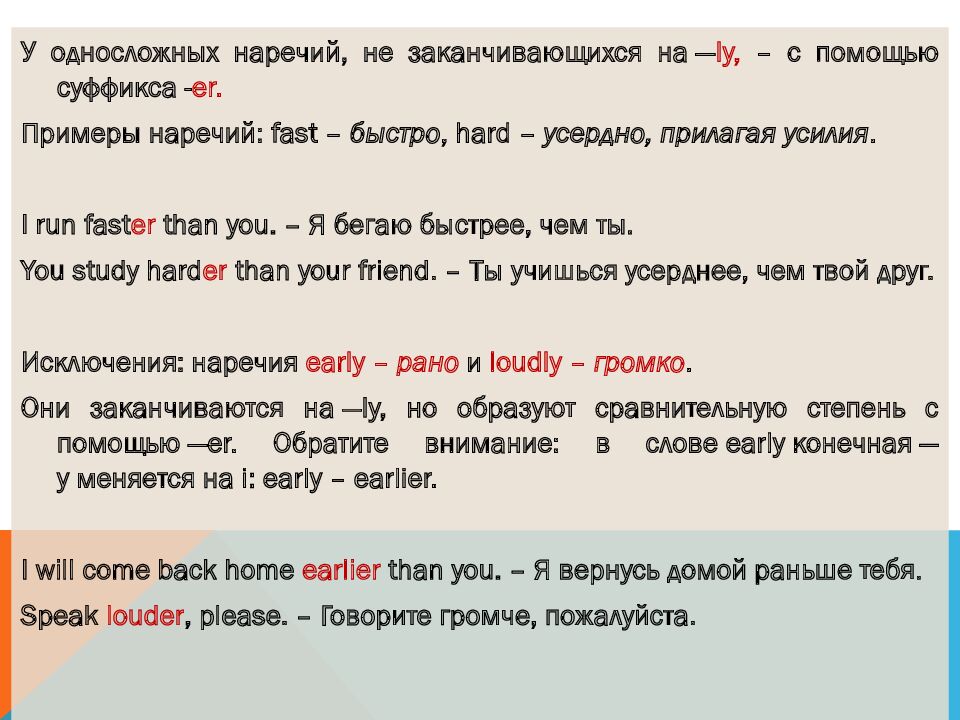
У односложных наречий, не заканчивающихся на — ly, – с помощью суффикса - er. Примеры наречий: fast – быстро, hard – усердно, прилагая усилия. I run fast er than you. – Я бегаю быстрее, чем ты. You study hard er than your friend. – Ты учишься усерднее, чем твой друг. Исключения: наречия early – рано и loudly – громко. Они заканчиваются на — ly, но образуют сравнительную степень с помощью — er. Обратите внимание: в слове early конечная — y меняется на i: early – earlier. I will come back home earlier than you. – Я вернусь домой раньше тебя. Speak louder, please. – Говорите громче, пожалуйста.
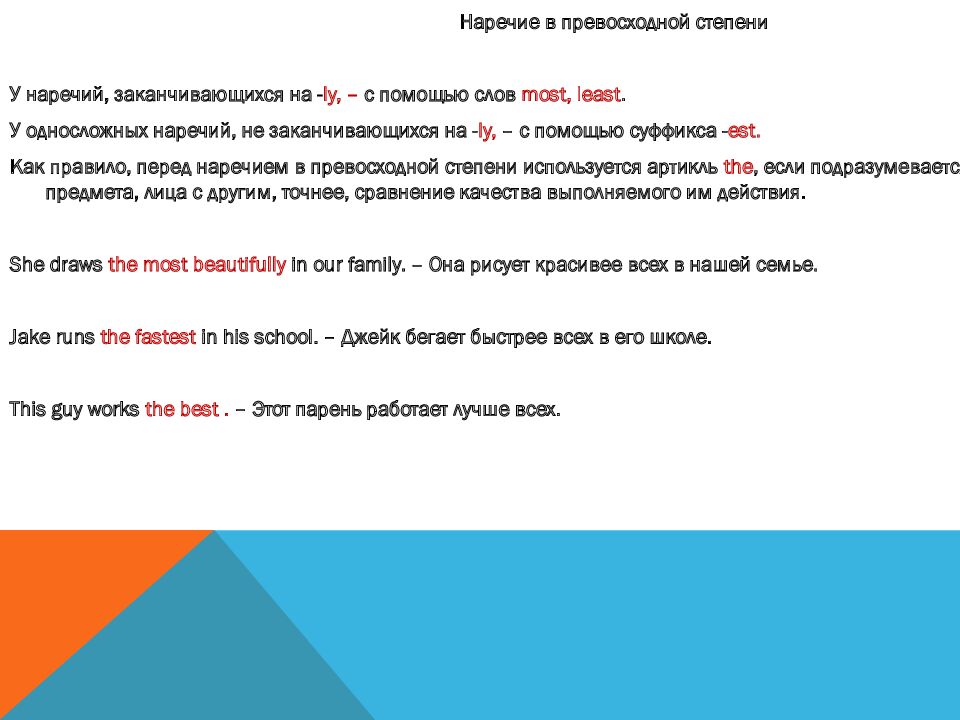
Наречие в превосходной степени У наречий, заканчивающихся на - ly, – с помощью слов most, least. У односложных наречий, не заканчивающихся на - ly, – с помощью суффикса - est. Как правило, перед наречием в превосходной степени используется артикль the, если подразумевается сравнение одного предмета, лица с другим, точнее, сравнение качества выполняемого им действия. She draws the most beautifully in our family. – Она рисует красивее всех в нашей семье. Jake runs the fastest in his school. – Джейк бегает быстрее всех в его школе. This guy works the best. – Этот парень работает лучше всех.
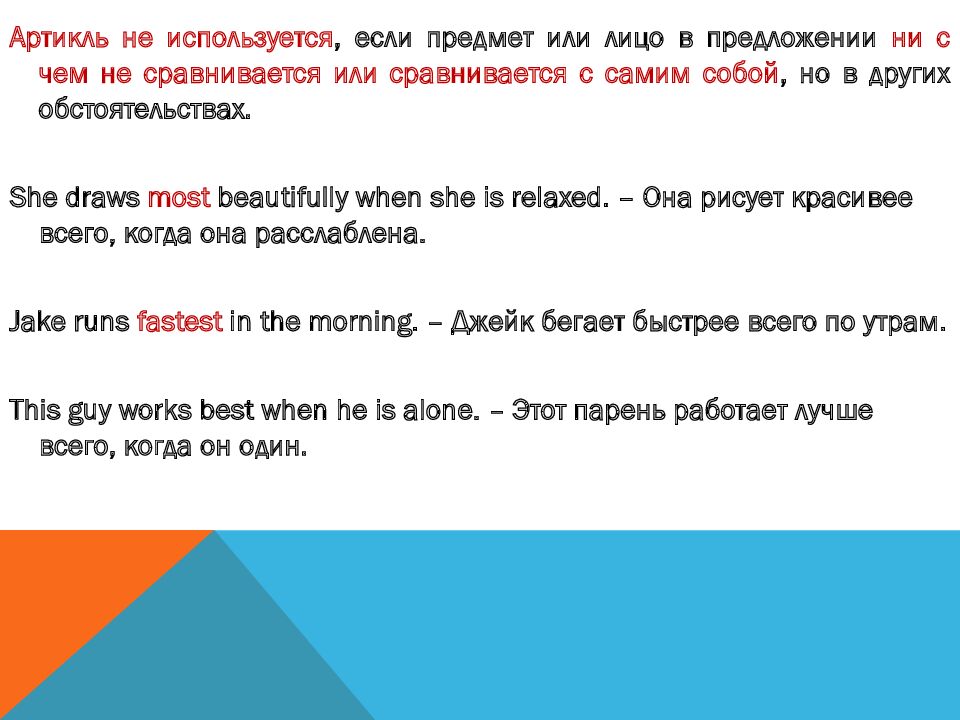
Артикль не используется, если предмет или лицо в предложении ни с чем не сравнивается или сравнивается с самим собой, но в других обстоятельствах. She draws most beautifully when she is relaxed. – Она рисует красивее всего, когда она расслаблена. Jake runs fastest in the morning. – Джейк бегает быстрее всего по утрам. This guy works best when he is alone. – Этот парень работает лучше всего, когда он один.
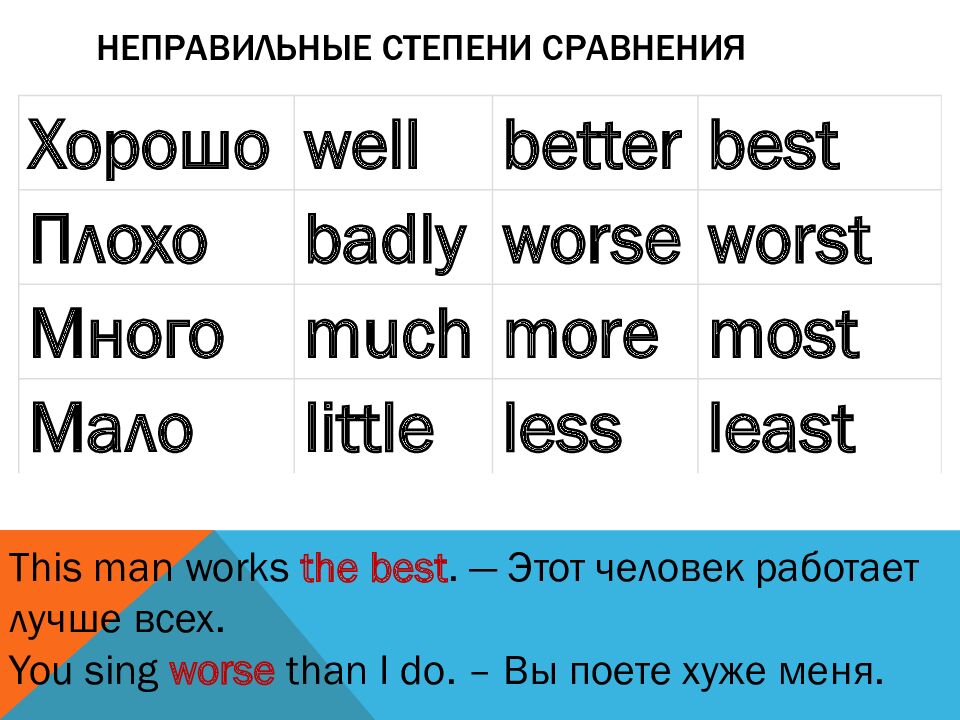
Хорошо well better best Плохо badly worse worst Много much more most Мало little less least This man works the best. — Этот человек работает лучше всех. You sing worse than I do. – Вы поете хуже меня.