


Reporter Created By AI
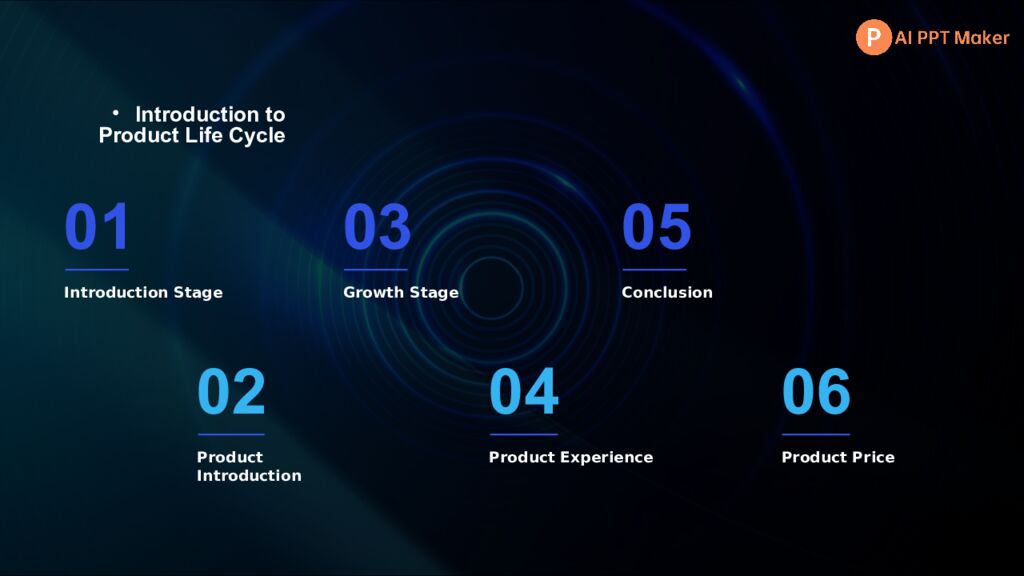
Introduction to Product Life Cycle 01 Introduction Stage 02 Product Introduction 03 Growth Stage 04 Product Experience 06 Product Price 05 Conclusion
01
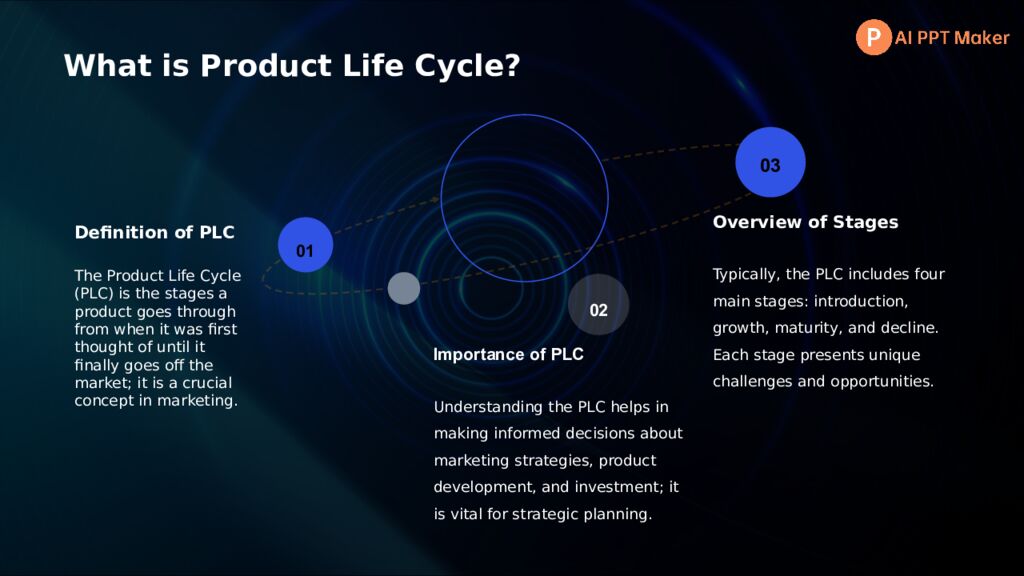
01 03 Typically, the PLC includes four main stages: introduction, growth, maturity, and decline. Each stage presents unique challenges and opportunities. Overview of Stages The Product Life Cycle (PLC) is the stages a product goes through from when it was first thought of until it finally goes off the market; it is a crucial concept in marketing. Definition of PLC 02 Understanding the PLC helps in making informed decisions about marketing strategies, product development, and investment; it is vital for strategic planning. Importance of PLC
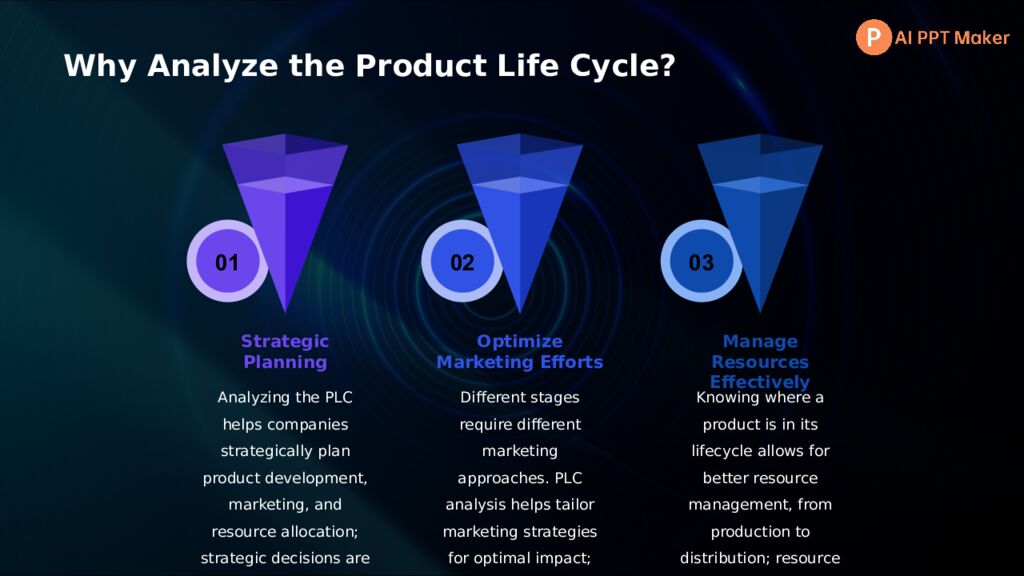
01 03 02 Different stages require different marketing approaches. PLC analysis helps tailor marketing strategies for optimal impact; optimizing campaigns is crucial. Optimize Marketing Efforts Analyzing the PLC helps companies strategically plan product development, marketing, and resource allocation; strategic decisions are made based on understanding where a product is. Strategic Planning Knowing where a product is in its lifecycle allows for better resource management, from production to distribution; resource allocation is optimized. Manage Resources Effectively
02
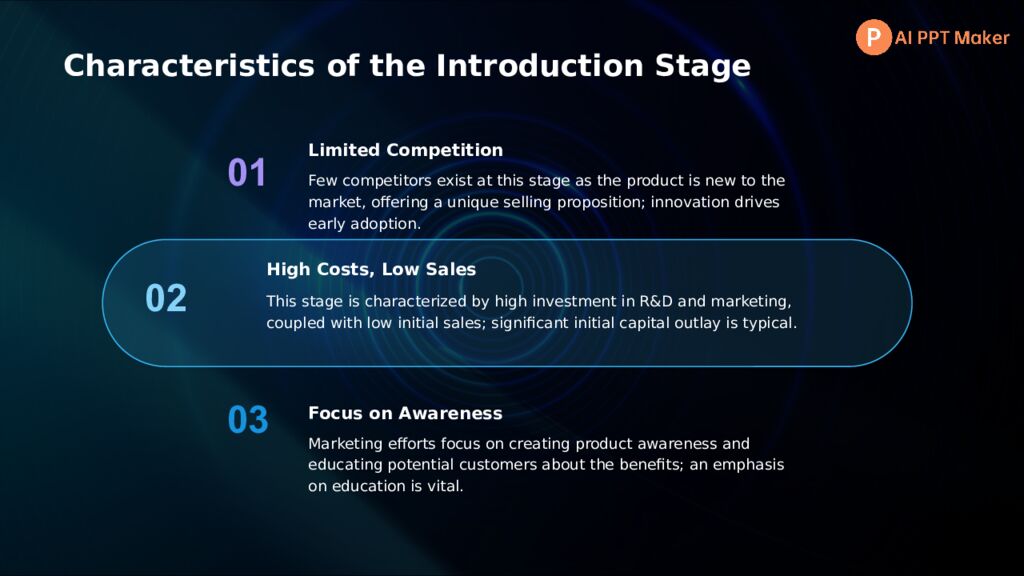
01 Few competitors exist at this stage as the product is new to the market, offering a unique selling proposition; innovation drives early adoption. Limited Competition 02 This stage is characterized by high investment in R&D and marketing, coupled with low initial sales; significant initial capital outlay is typical. High Costs, Low Sales 03 Focus on Awareness Marketing efforts focus on creating product awareness and educating potential customers about the benefits; an emphasis on education is vital.
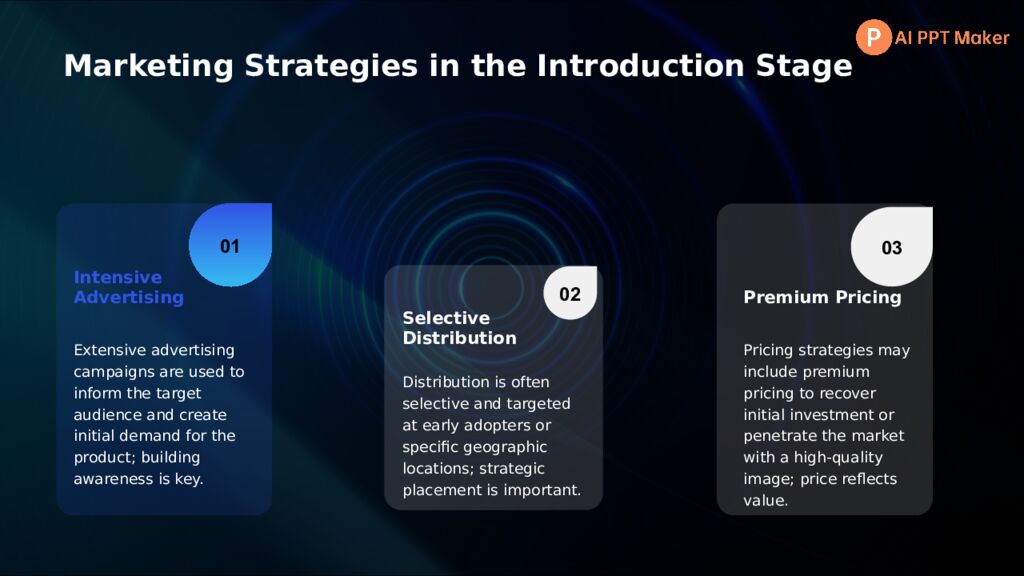
01 Extensive advertising campaigns are used to inform the target audience and create initial demand for the product; building awareness is key. Intensive Advertising 02 Distribution is often selective and targeted at early adopters or specific geographic locations; strategic placement is important. Selective Distribution 03 Pricing strategies may include premium pricing to recover initial investment or penetrate the market with a high-quality image; price reflects value. Premium Pricing
A newly launched electric vehicle (EV) model can be an example, where production costs are significant, and marketing focuses on innovative features; an example would be Tesla's initial launch. New Electric Vehicle Model
03
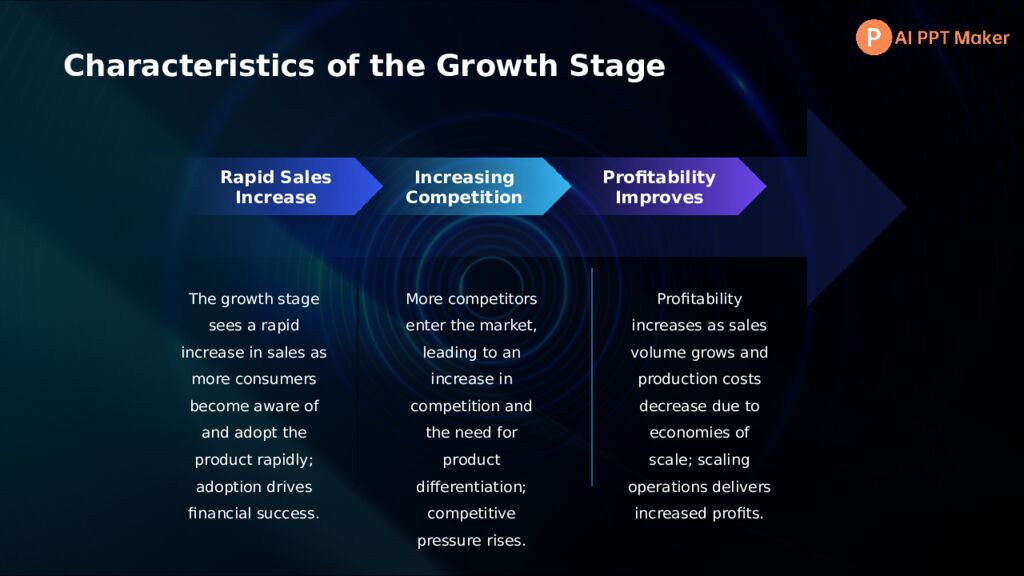
Rapid Sales Increase Increasing Competition Profitability Improves The growth stage sees a rapid increase in sales as more consumers become aware of and adopt the product rapidly; adoption drives financial success. More competitors enter the market, leading to an increase in competition and the need for product differentiation; competitive pressure rises. Profitability increases as sales volume grows and production costs decrease due to economies of scale; scaling operations delivers increased profits.
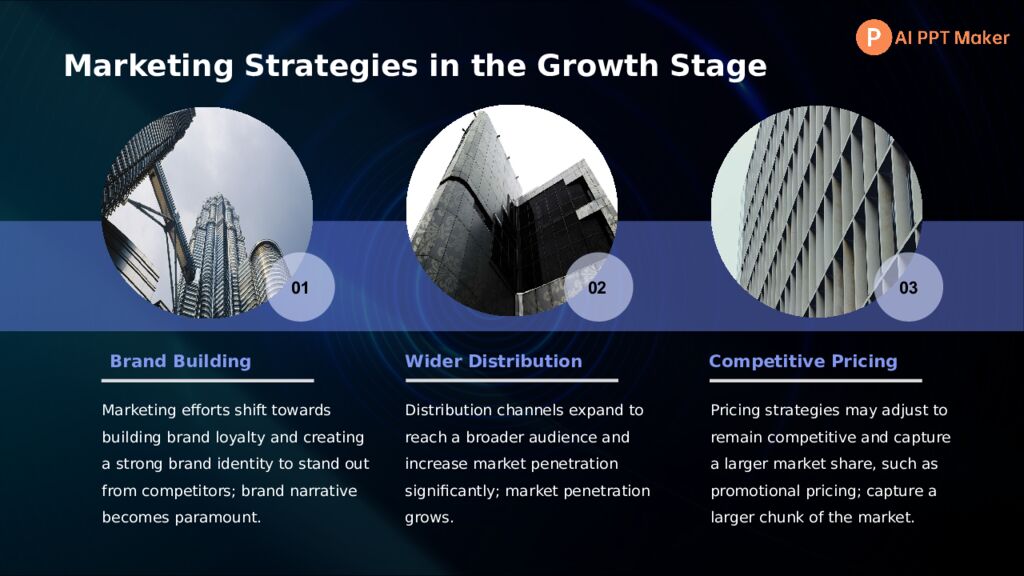
Marketing efforts shift towards building brand loyalty and creating a strong brand identity to stand out from competitors; brand narrative becomes paramount. Brand Building Distribution channels expand to reach a broader audience and increase market penetration significantly; market penetration grows. Wider Distribution Pricing strategies may adjust to remain competitive and capture a larger market share, such as promotional pricing; capture a larger chunk of the market. Competitive Pricing 01 02 03
Wireless Earbuds Wireless earbuds experienced this stage in recent years, as technology improved, prices dropped, and usage became widespread; AirPods epitomize it.
04
Sales Peak and Plateau Sales growth slows down and eventually plateaus as the market becomes saturated and most potential customers have already adopted the product; saturation is the norm. Price Wars Price wars and promotional activities become common as companies try to maintain or increase their market share; discount pricing is employed. Intense Competition The market is characterized by intense competition as numerous brands compete for market share; market share is aggressively defended. 0 2 0 3 0 1
01 Focus on product differentiation, highlighting unique features, quality, or customer service to stand out from the competition; differentiation is key. Product Differentiation 02 Target specific market segments with tailored marketing campaigns to maintain sales and acquire new customers; segmentation strategy is employed. Market Segmentation 03 Implement cost-cutting measures to maintain profitability as sales growth slows down and competition intensifies; efficiency is prioritized. Cost Efficiency
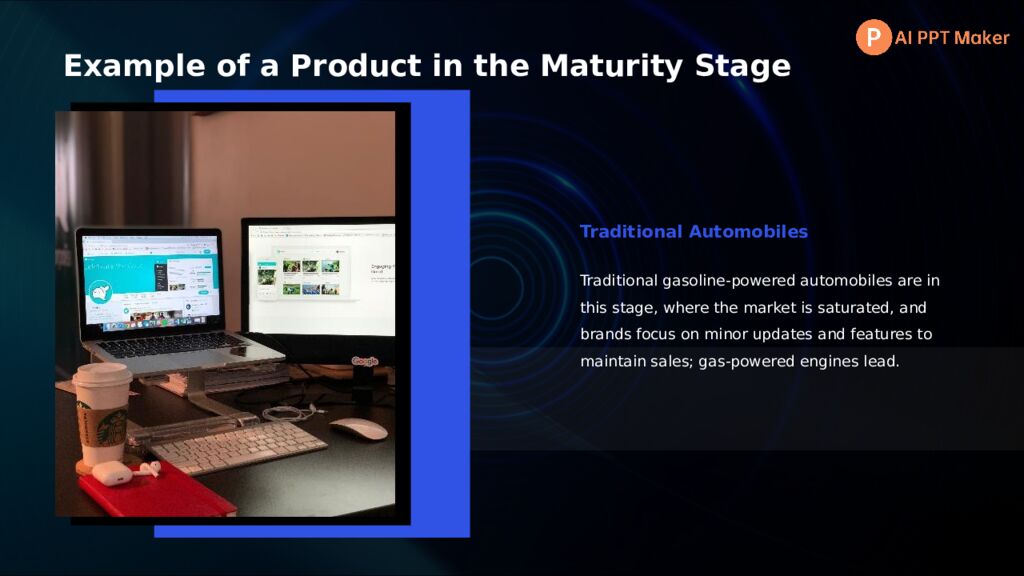
Traditional gasoline-powered automobiles are in this stage, where the market is saturated, and brands focus on minor updates and features to maintain sales; gas-powered engines lead. Traditional Automobiles
05
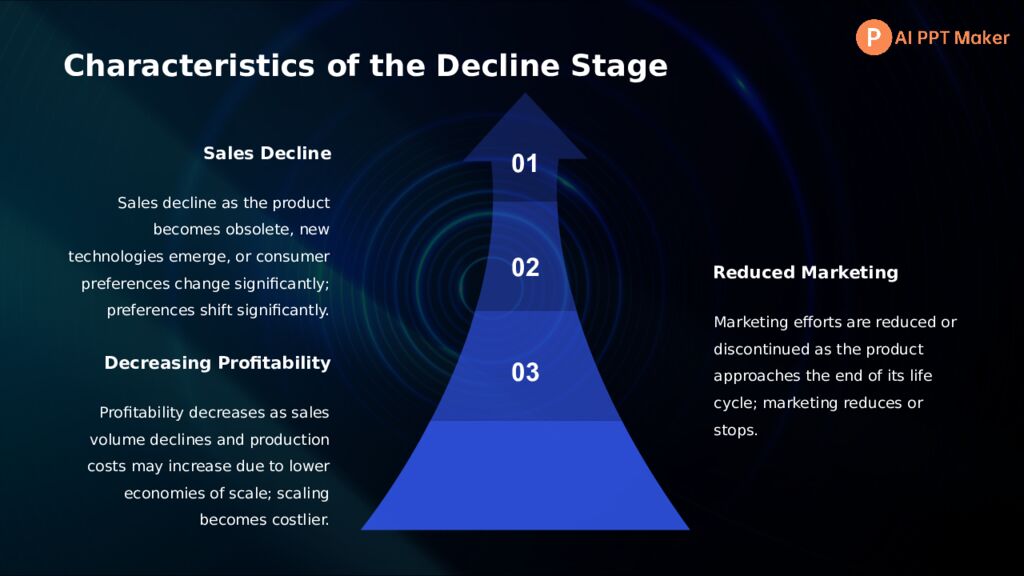
Sales Decline Sales decline as the product becomes obsolete, new technologies emerge, or consumer preferences change significantly; preferences shift significantly. Reduced Marketing Marketing efforts are reduced or discontinued as the product approaches the end of its life cycle; marketing reduces or stops. 01 02 03 Decreasing Profitability Profitability decreases as sales volume declines and production costs may increase due to lower economies of scale; scaling becomes costlier.
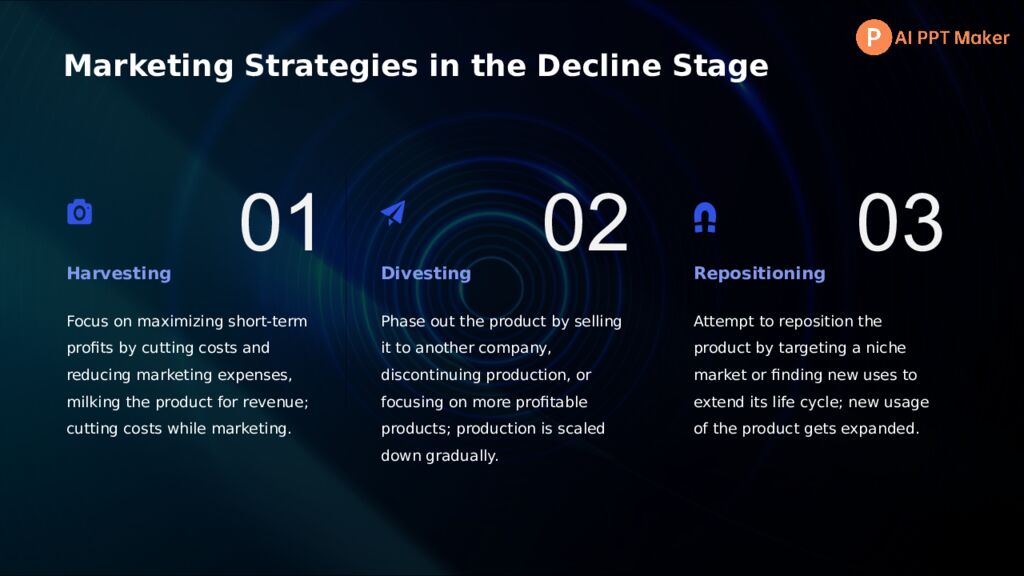
Attempt to reposition the product by targeting a niche market or finding new uses to extend its life cycle; new usage of the product gets expanded. Repositioning Focus on maximizing short-term profits by cutting costs and reducing marketing expenses, milking the product for revenue; cutting costs while marketing. Harvesting Phase out the product by selling it to another company, discontinuing production, or focusing on more profitable products; production is scaled down gradually. Divesting 01 02 03
Physical media like DVDs and CDs are in decline, as digital streaming services become more popular; physical media loses to digital media. Physical Media
06

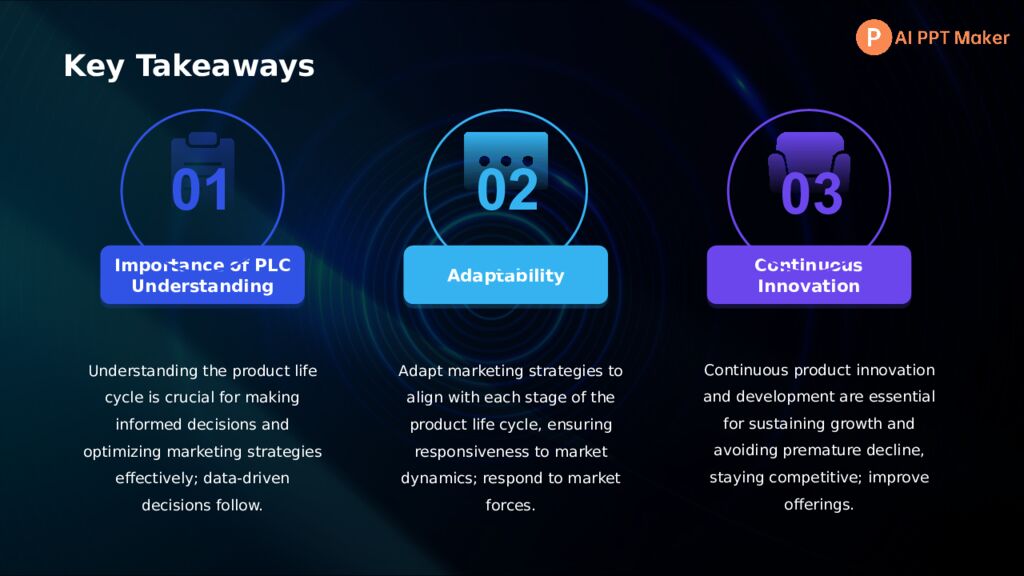
Importance of PLC Understanding 01 Adaptability 02 Continuous Innovation 03 Understanding the product life cycle is crucial for making informed decisions and optimizing marketing strategies effectively; data-driven decisions follow. Adapt marketing strategies to align with each stage of the product life cycle, ensuring responsiveness to market dynamics; respond to market forces. Continuous product innovation and development are essential for sustaining growth and avoiding premature decline, staying competitive; improve offerings.
Data-Driven Insights Advance in data analytics and technology can provide deeper insights into product performance and consumer behavior; insights via Big Data. Shortened Life Cycles Products life cycles are becoming increasingly shorter due to rapid technological advancements and changing consumer preferences; shortened cycles are normal. Sustainability Sustainability and ethical considerations are becoming more vital in product development and marketing during the product life cycle for ethical marketing; sustainable considerations are key.
Strategic Adaptability Successful businesses must strategically adapt to the product life cycle to remain competitive and meet evolving market demands proactively; prepare for change.

Thank you for watching. Reporter