


Vasilii Davydov, 2023, Astana
Humanity is used to energy from atomic fusion since the beginning – the Sun generates its heat using nuclear reactions. Nuclear energy can generate huge amounts of electricity much effectively than other types. However, potential radioactive pollution scares lots of people.

There are several designs of reactors, including: Thermal (thermonuclear) reactors Fast neutron reactors Light water reactors Heavy water reactors Gas-cooled reactors Thorium reactors
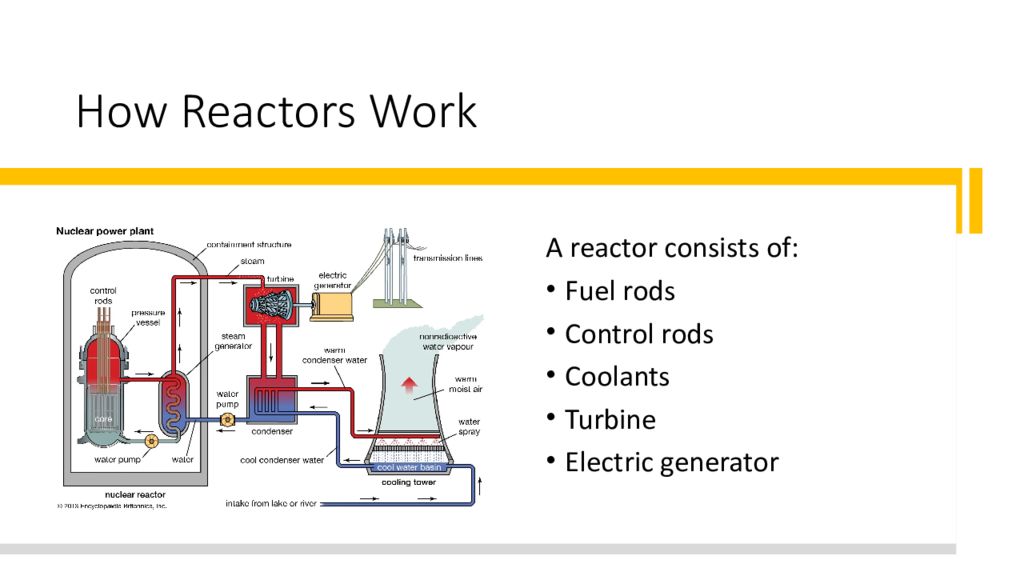
A reactor consists of: Fuel rods Control rods Coolants Turbine Electric generator
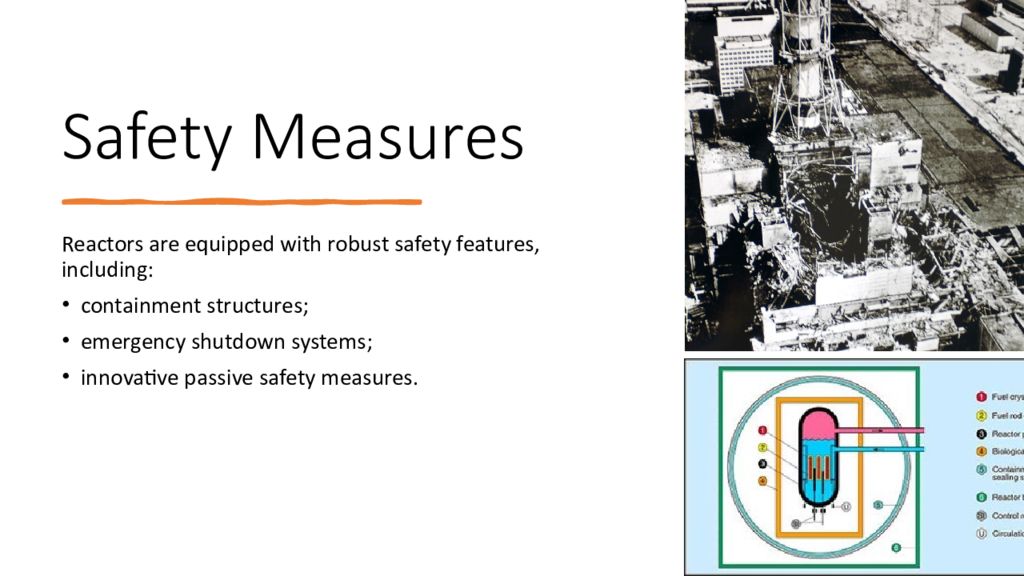
Reactors are equipped with robust safety features, including: containment structures; emergency shutdown systems; innovative passive safety measures.
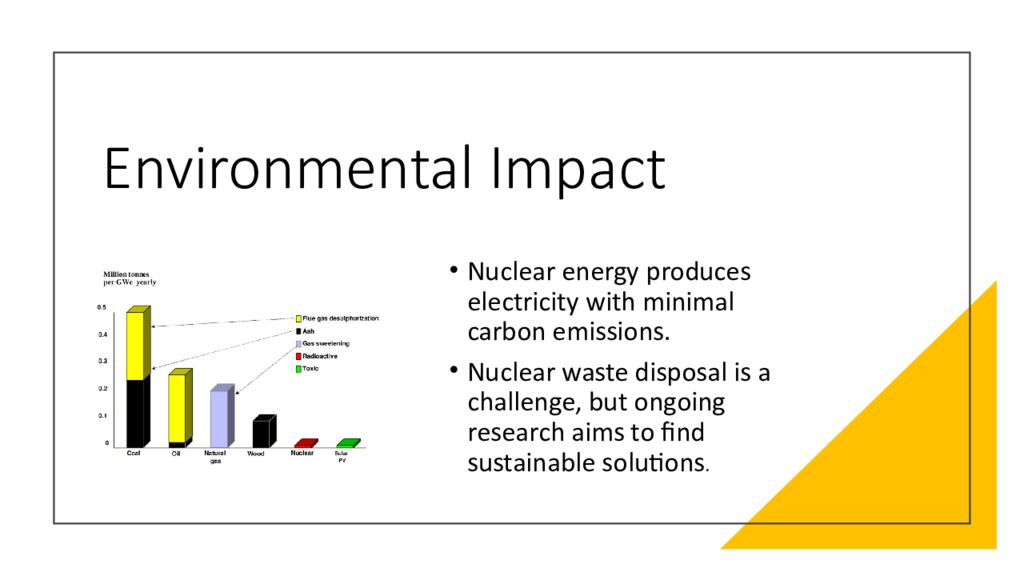
Nuclear energy produces electricity with minimal carbon emissions. Nuclear waste disposal is a challenge, but ongoing research aims to find sustainable solutions.
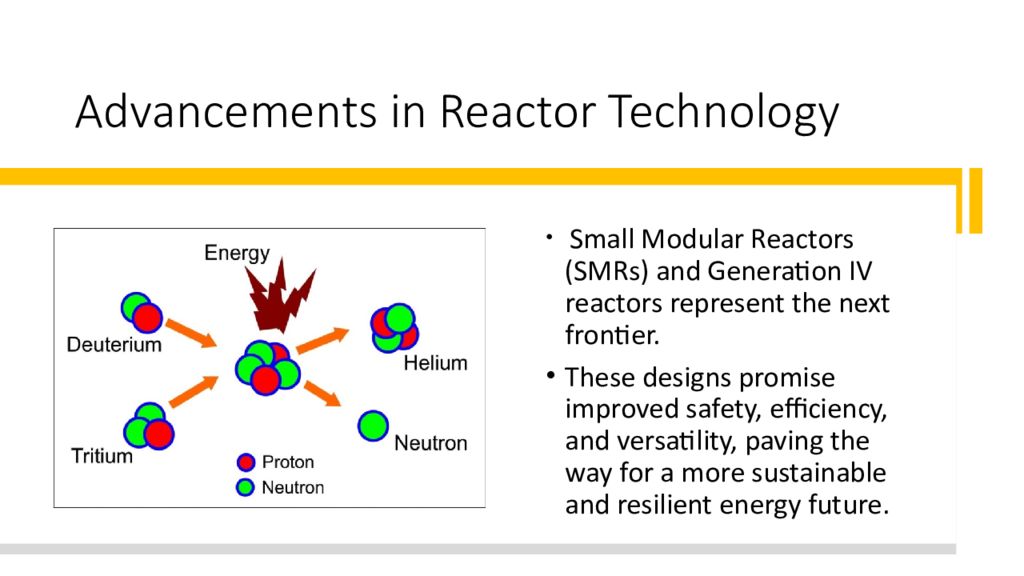
Small Modular Reactors (SMRs) and Generation IV reactors represent the next frontier. These designs promise improved safety, efficiency, and versatility, paving the way for a more sustainable and resilient energy future.
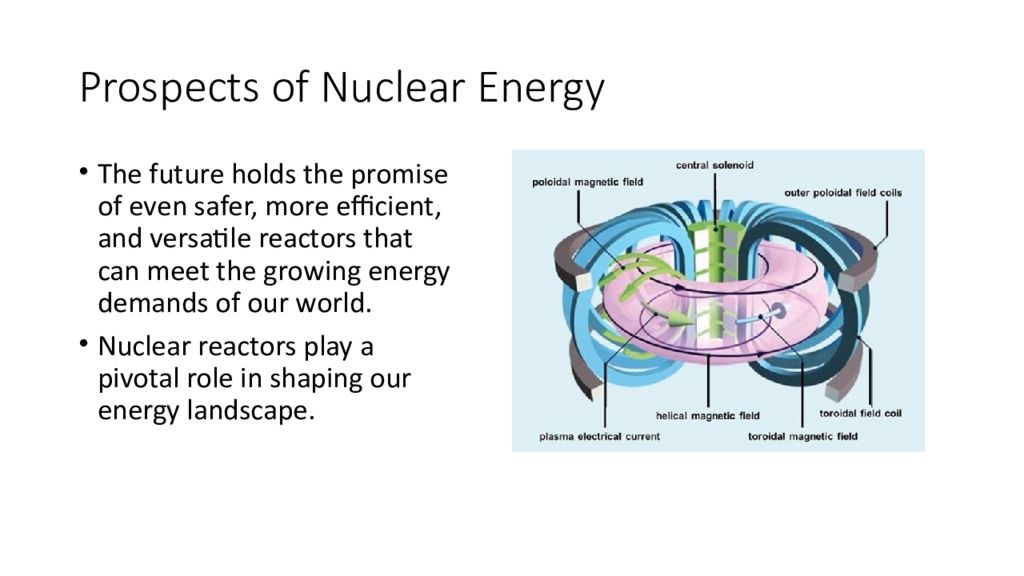
The future holds the promise of even safer, more efficient, and versatile reactors that can meet the growing energy demands of our world. Nuclear reactors play a pivotal role in shaping our energy landscape.
Thank you for your attention. Now, I welcome any questions you may have.